

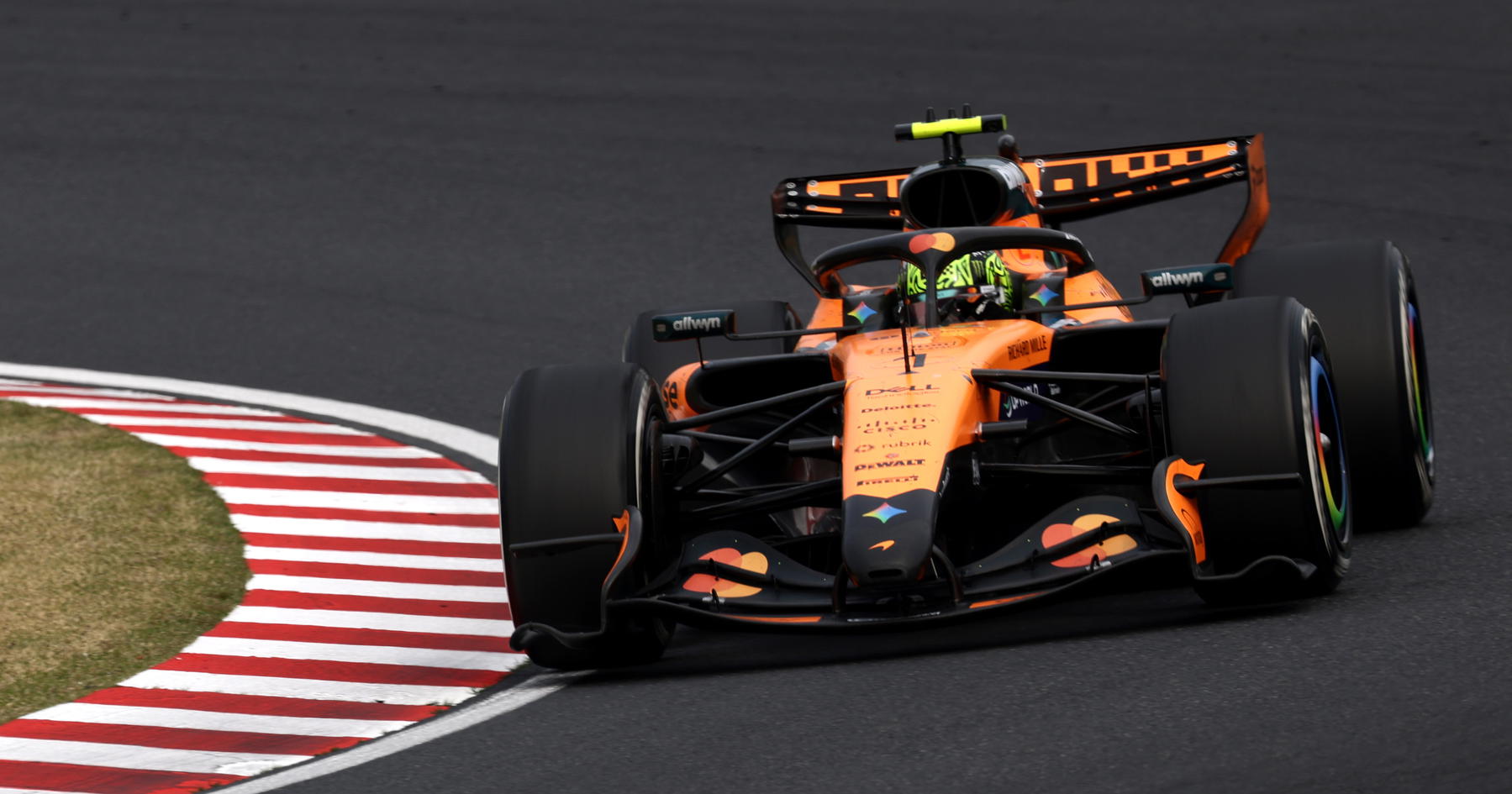
McLaren finally managed to field two cars in Japan after three races, having suffered the embarrassment of a double DNS at the Chinese Grand Prix two weeks earlier due to the complex interaction between the power unit control software and the transmission system.
That said, the MCL40 demonstrated at Suzuka, particularly through Oscar Piastri's strong performance, that the car's concept is fundamentally sound, although not all of its critical issues have yet been resolved.
During the opening round in Melbourne, it was clear that a major weakness of the car was tyre degradation.
This problem also emerged at the Shanghai International Circuit, albeit only during the sprint, given the team's absence from the grand prix.
Team principal Andrea Stella has not hidden the fact that the car has been underdeveloped up to this point and requires upgrades for the championship's resumption in Miami.
These updates are expected, on one hand, to address tyre degradation — seemingly linked to less-than-optimal aerodynamic balance — and, on the other, to improve overall performance to avoid losing ground to direct rivals.
With a Mercedes power unit, McLaren will not have access to the FIA's ADUO (Additional Development and Upgrade Opportunities programme) concessions that are expected to be granted from the Spanish Grand Prix to Ferrari, Audi and Honda.
This means that the team's only path to performance gains lies in aerodynamic packages capable of reshaping the car's aerodynamic fingerprint, redistributing load to make weight transfer less abrupt and sensitive, while also reducing the current front-end bias evident on the MCL40.
All teams will bring upgrades to Miami, so it is reasonable to assume that while McLaren's Woking-based engineers will introduce performance developments, their primary focus will be on addressing the project's remaining weaknesses rather than directly countering rival solutions.
New versions of the main aerodynamic surfaces — particularly flap elements — are expected to debut in Florida, along with a careful revision of the floor.
While not visually striking, these changes are aimed at achieving an aerodynamic DNA that better integrates with the car's overall dynamics.
Originally published by RacingNews365 —
Read Original Article