

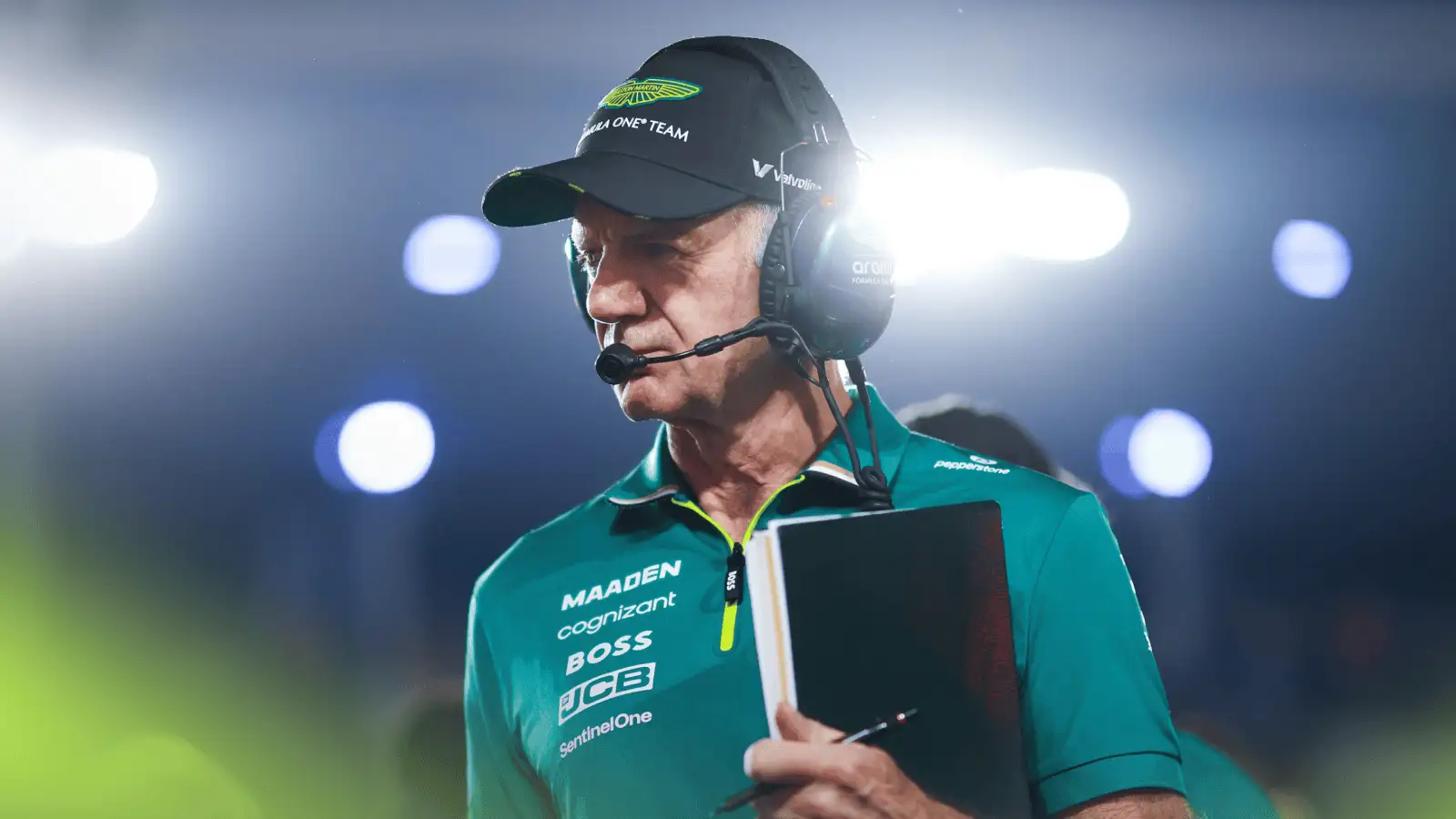
After a challenging start to the F1 2026 season, Aston Martin will debut its long-awaited B-spec car at this weekend’s Hungarian Grand Prix.
Having employed an unusual upgrade strategy, the new-look AMR26 will represent a team slowly being shaped in the image of Adrian Newey…
Adrian Newey’s influence behind Aston Martin’s Hungarian GP upgrade
Want more PlanetF1.com coverage? Add us as a preferred source on Google to your favourites list for news you can trust
A version of this article originally appeared in PlanetF1.com’s conclusions from the 2026 Austrian Grand Prix
Has a team of such vast resource and brainpower ever looked so lost?
After a poor start to the season, a team of Aston Martin’s ambition can only struggle this way for so long before those two precious commodities, belief and motivation, are sapped out of the place.
“It’s weighing on everyone,” Mike Krack, the team’s chief trackside officer, told PlanetF1.com and other media outlets in Barcelona last month.
“You can feel it. You can feel it in the garage. You can feel it especially with the drivers.
“It’s a very difficult situation.”
Central to Aston Martin’s mid-season decline, after an already tough start to 2026, has been the team’s unique upgrade strategy.
Stung by the experience of 2026, Newey confirmed during his recent trackside appearance in Monaco that he has orchestrated a complete rethink of the way Aston Martin does things to prevent a repeat of this season.
Rather than regularly bringing small upgrades to the car, Aston Martin has instead decided to introduce a significant package at this weekend’s Hungarian Grand Prix.
With other teams – including Cadillac – making rapid gains at the start of a new rules cycle, it was inevitable that a stagnant Aston Martin would drift away from the pack as the first half of the season unfolded.
In other words, Newey has braced the team for short-term pain with an eye on long-term gain – not just in 2026 but beyond.
All very well, but if the Hungary update doesn’t meet expectations either…
Go deeper: How to see air like Adrian Newey
F1 aerodynamics: How to see air like Adrian Newey | The Tech Check Up
Can Adrian Newey really see air?
By Newey’s own admission, Aston Martin’s approach to this season was – how to put this politely? – a mess.
With Adrian only completing his move from Red Bull at the start of March last year, it wasn’t until the middle of April – four months later than the rest – that Aston Martin finally put a model of the 2026 car in the wind tunnel.
And with Newey claiming that the team only discovered in November 2025 that Honda was seriously struggling with its 2026 engine – to this day an absurd admission, not least when some of us already knew back in January – the seeds for Aston’s annus horribilis were sown.
This, clearly, was no way to prepare for a season that once held such promise.
It can’t happen again.
And under Newey’s watch, bet your bottom dollar that it won’t.
No. Everything at Aston Martin will be more considered going forward. More purposeful. Smarter.
Indeed, when the upgrade finally takes to the track this weekend, it will mark the first real glimpse of an Aston Martin team now being constructed in Newey’s image.
The start of a new dawn.
And what is it they say about dawns again?
Ah, yes: the night is darkest just before that first little glimmer of light.
In his own words: Adrian Newey on the Aston Martin upgrade
The B-spec car in Hungary will mark the first stage of a two-step upgrade for Aston Martin, with improvements to the Honda power unit expected to arrive at the Dutch Grand Prix next month.
In a recent interview with Aston Martin’s official website, Newey provided the first details of the new-look AMR26.
He said: “The main structural elements remain the same – the chassis and gearbox architecture don’t fundamentally change – but we’ve taken weight out of both, which required re-homologating and crash testing the forward chassis.
“The front suspension is unchanged. The rear suspension is slightly revised.
“We’ve developed a new nose and substantially revised aerodynamic surfaces.
“So, while the core structure is similar, it’s a big aerodynamic package coupled with significant weight reduction. The target is to get very close to the weight limit.”
“We’re predicting a large step, but I’m reluctant to put specific numbers out there. We’ll have to see when the car gets on track.
“Historically, at this team, there hasn’t been enough investment in engineering simulation tools – not just project management systems, but the core physics tools themselves.
“We’re putting that investment in now, but you don’t rewrite and validate those tools overnight. Correlating them properly with the real car takes time.
“At the moment, they’re improving, but the real gains from that work will come later in the year.”
Want to be the first to know exclusive information from the F1 paddock? Join our broadcast channel on WhatsApp to get the scoop on the latest developments from our team of accredited journalists.
You can also subscribe to the PlanetF1 YouTube channel for exclusive features, hear from our paddock journalists with stories from the heart of Formula 1 and much more!
Read next: Aston Martin ‘counting the days’ until long-awaited upgrade boost
Originally published by Planet F1 —
Read Original Article