

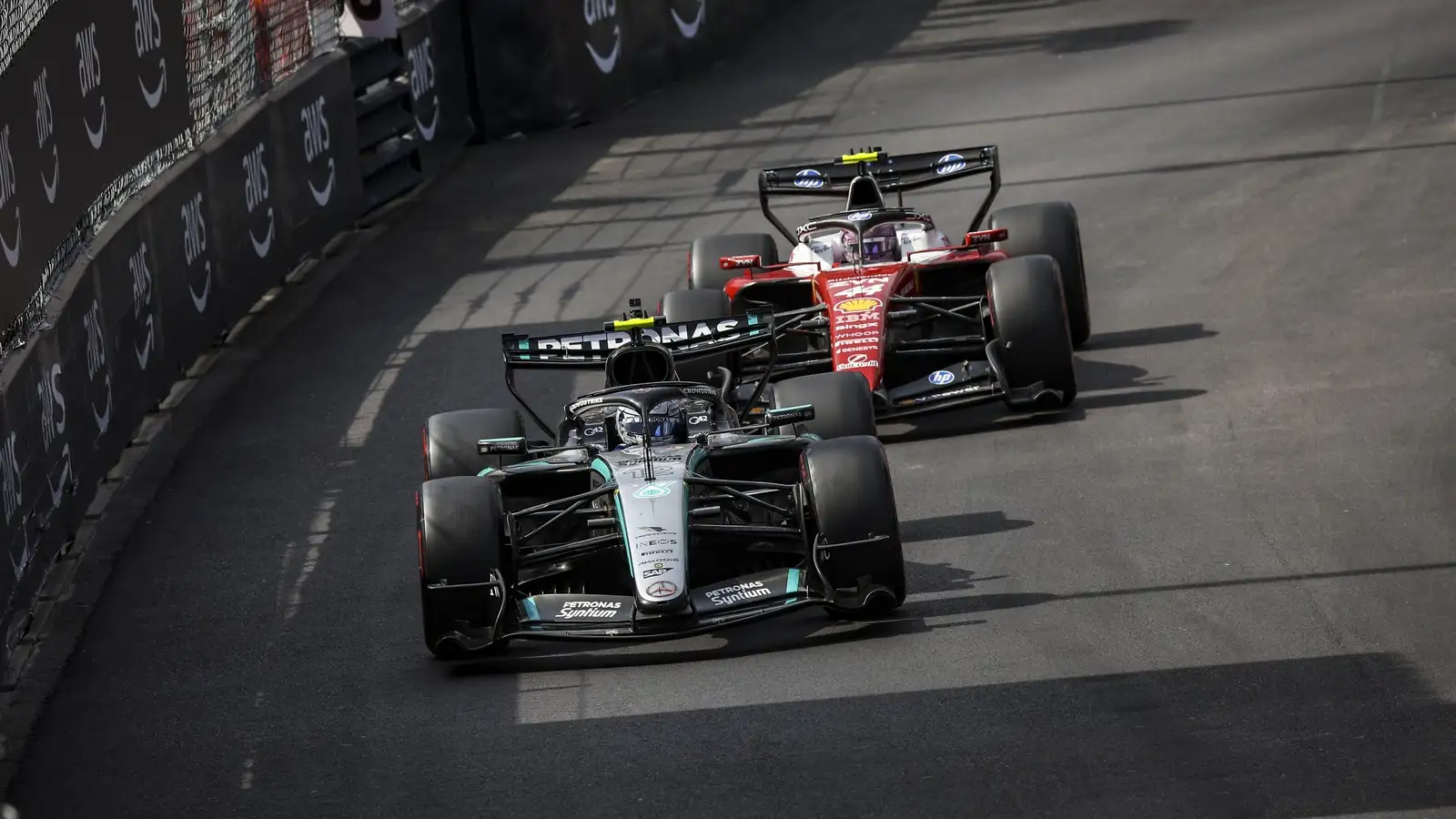
Kimi Antonelli was on a different level to everyone else in the Monaco GP, refusing to let anyone threaten his lead even for a moment.
Why Antonelli possessed such superior pace, and exactly how he managed to extract, is revealed in the telemetry data.
Kimi Antonelli’s Monaco GP dominance explained by telemetry
Want more PlanetF1.com coverage? Add us as a preferred source on Google for news you can trust.
What was known even before the start of the race itself was that we would be highly unlikely to see an on-track overtake, at least among the top teams. The only realistic chance for anyone to challenge Antonelli was at the race start, or through strategy.
However, despite facing numerous issues at the beginning of the season, the young Italian has genuinely improved when it comes to race starts. He got off the line very well, further aided by the fact that Verstappen barely managed to leave his starting box due to a technical problem.
In other words, the only driver who could pose a threat to Kimi Antonelli in the Monaco GP was Hamilton, directly behind him, and the most realistic opportunity to do so lay in strategy.
But in order to execute that, as the driver chasing, you must stay close enough to the leading car to have the margin for a strategic move in the first place.
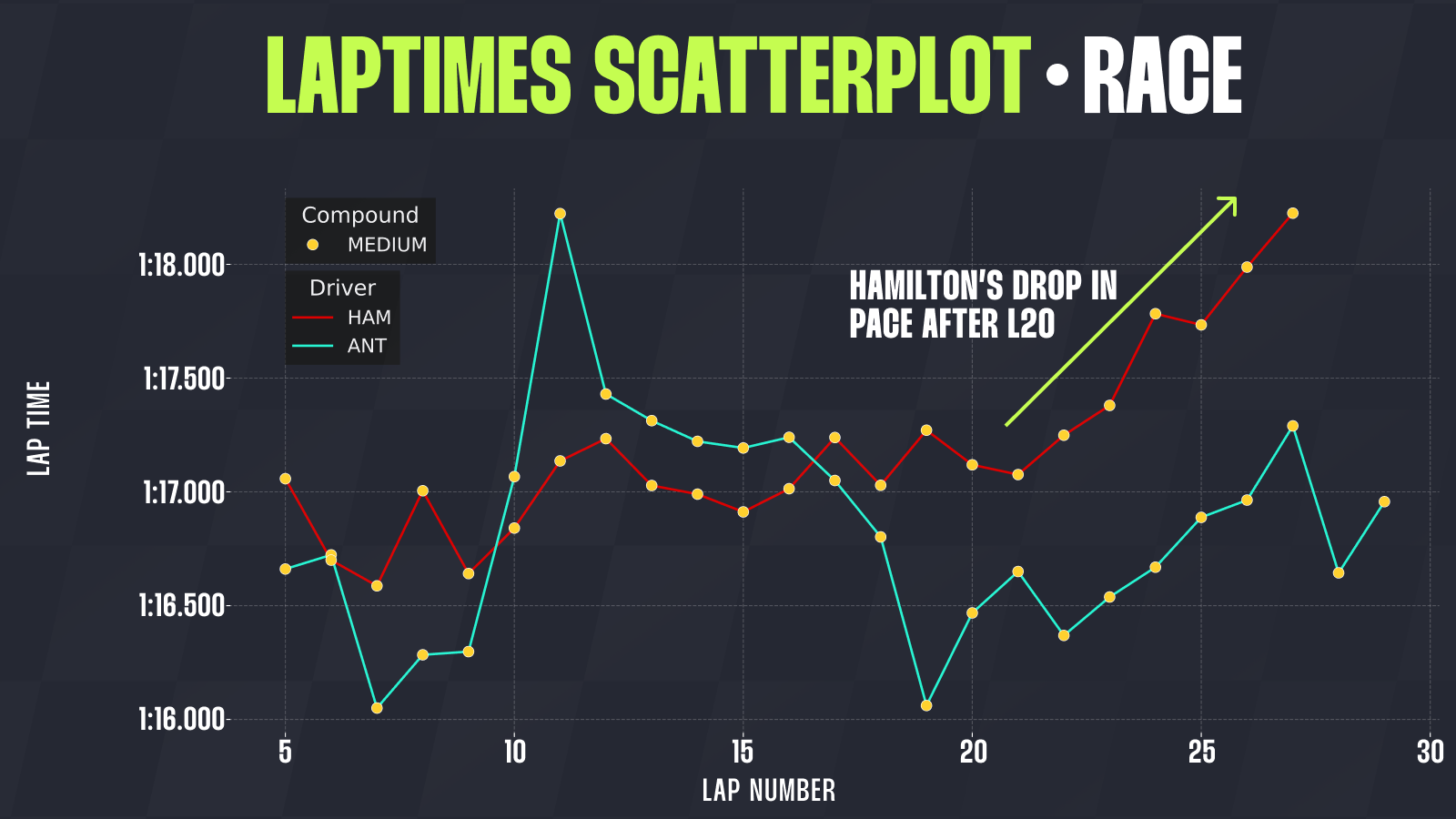
This was exactly what Hamilton did exceptionally well during the early phase of the race. From Lap 10 to Lap 15, Hamilton was consistently faster and was reducing the delta time, but from Lap 18 onwards, his lap times began to drop rapidly while Antonelli picked up his pace.
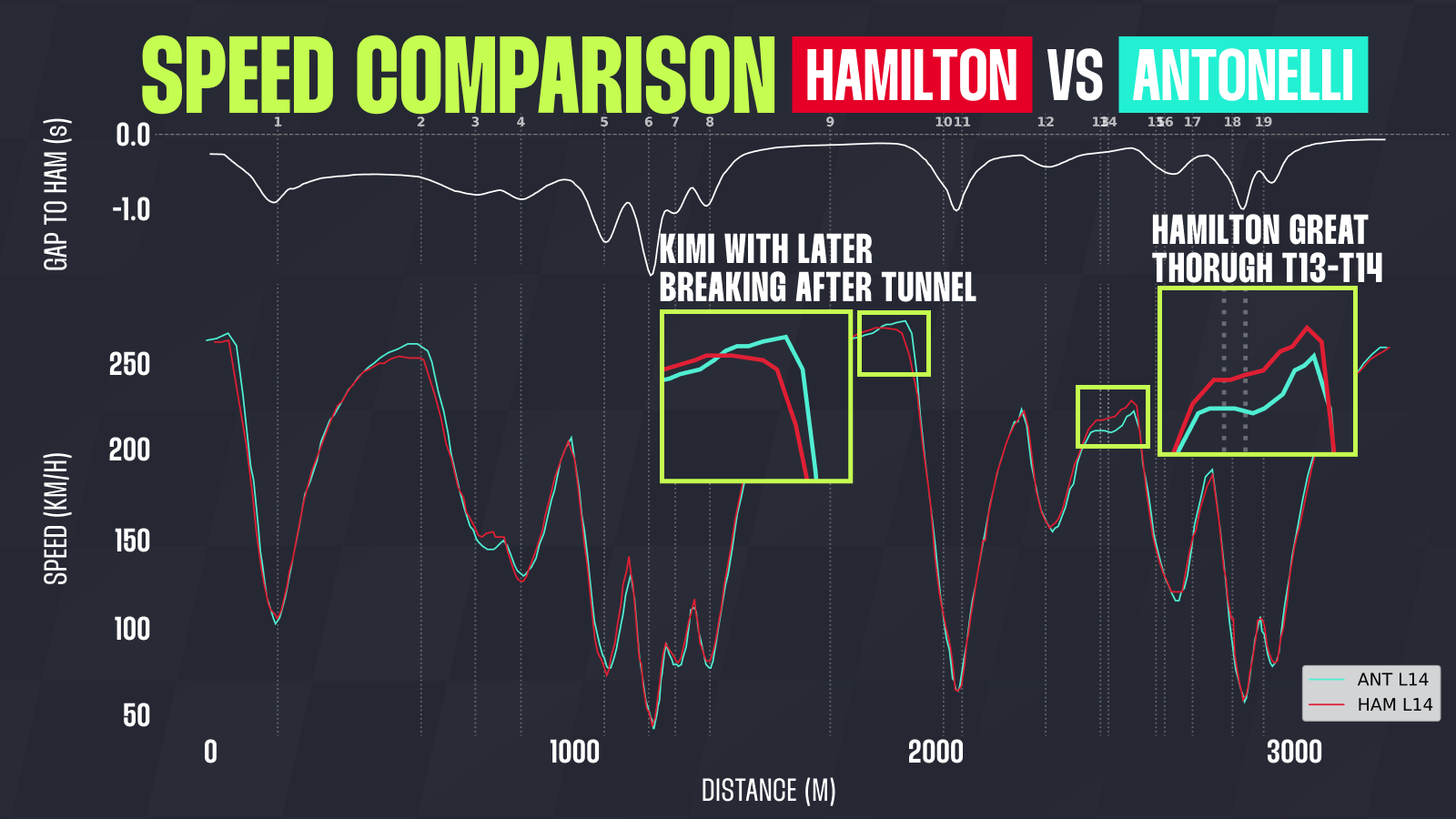 What we can see from the data is that during the periods when Hamilton was faster on track, he was making up his advantage exclusively from Casino Square to the entry of the tunnel. The price he paid for this was tyre life, as it appears he took more out of them during this phase of the race than he would have liked.
This ultimately led to a massive performance drop-off very quickly, which Antonelli capitalised on to disappear into the distance.
Following Hamilton’s drop-off, the young Italian built an ever-widening gap, and the chance of anyone threatening him was minimal.
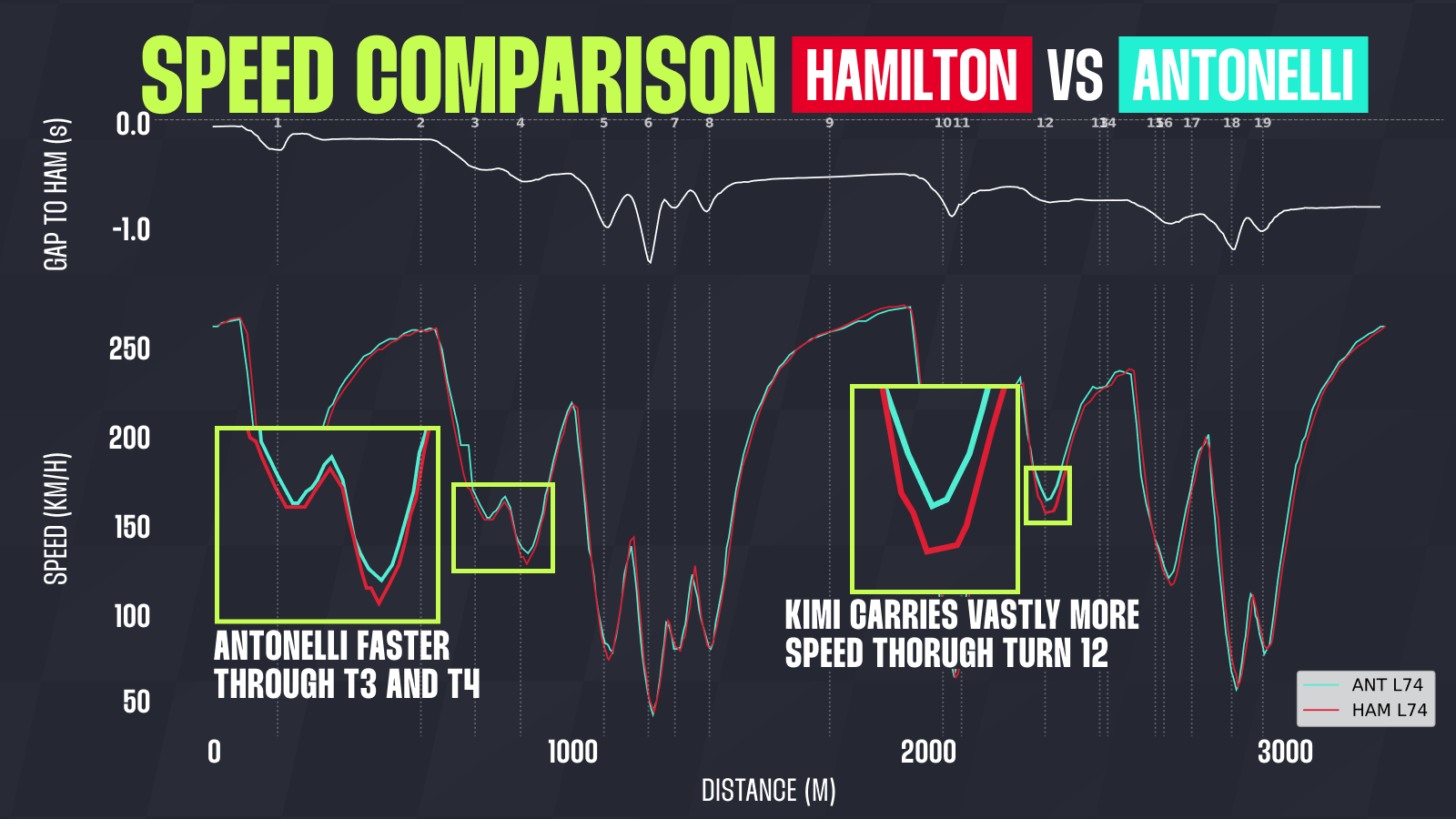
Antonelli built his advantage primarily by managing to carry more speed through the medium-speed corners. At the same time, the top speed he managed to reach on the straight after Sainte Devote and through the tunnel was significantly higher compared to the Ferrari driver.
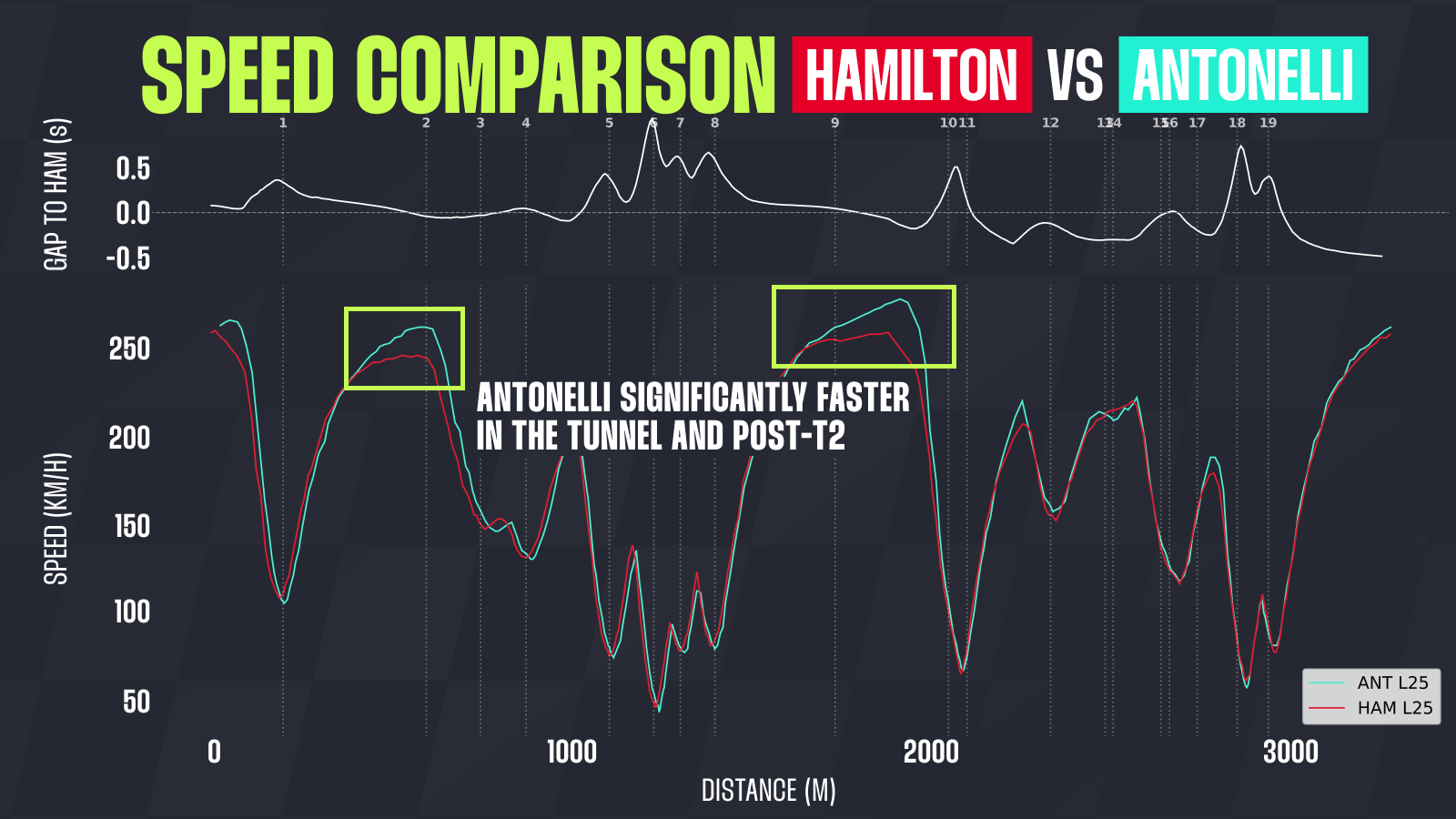
In addition to this, another area where he generated a large delta was under braking, particularly on the entry to the Nouvelle Chicane, where he had been fantastic all weekend and which had handed him pole position in the first place. Antonelli managed to maintain a higher minimum speed here, take a better racing line, and brake drastically later compared to Hamilton.
How did he achieve this? It was a combination of an excellent car setup, which Mercedes dialled in during the break between Friday and Saturday proving that alongside a brilliant power unit and energy recovery system, the W17 possesses a truly fantastic mechanical baseline and aerodynamics, and Antonelli’s mega-precise driving.
The teenager himself stated after the race how satisfied he was with the car’s behaviour, how natural everything felt during the race, and how the car gave him an immense amount of confidence, which is probably the most critical factor when racing in Monaco.
Following the tyre changes and the switch to the hard compound for the second half of the race, the control exercised by the Italian remained absolute. Although Hamilton now drove much more consistently, knowing he had to make this set last until the end of the race, Kimi just kept extending the delta time.
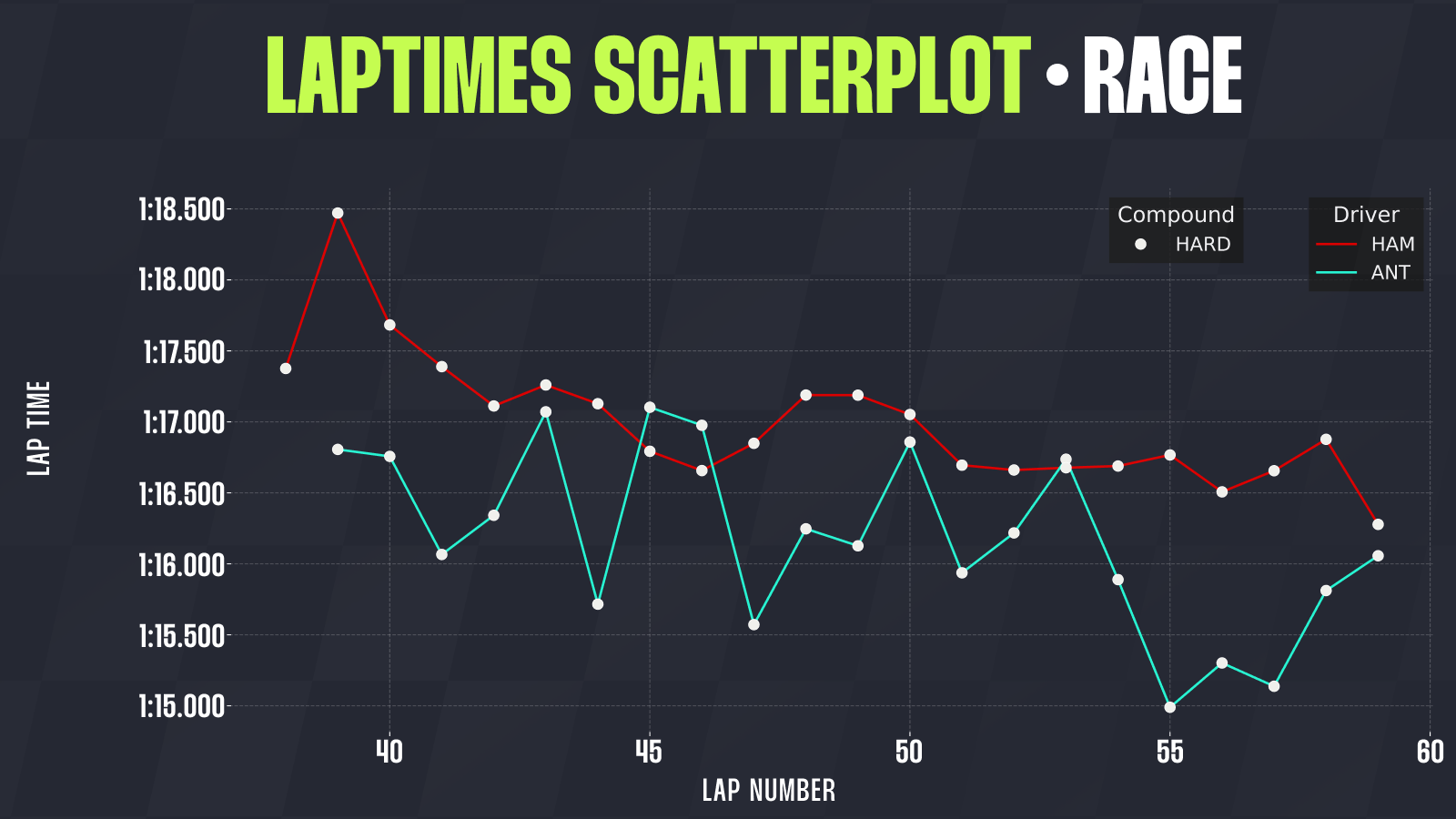
Had it not been for the red flag, we would have witnessed total dominance and who knows how large Hamilton’s final deficit would have been, but incidents at the final corner provided the best possible opportunity for the Briton to turn things around. A 10 lap sprint to the race on soft tyres from a standing start was the only opportunity Hamilton could exploit.
But in the end, he wasn’t even close. In fact, the gap Antonelli opened up in those final 10 laps and the pace he ran was even more fascinating. On average, he was 0.8 seconds per lap faster in the final stint, while on some laps, he extended the difference by up to 1.5 seconds.
This massive advantage came once again from the medium-speed corners. From the graph below, you can see the speed delta on Turns 3 and 4, as well as Turns 12 and 16.
A well deserved Monaco GP victory for Kimi Antonelli and pure dominance from lights to flag. The composure and precision with which this young man drives is unbelievable.
The current championship points deficit he holds over his teammate stands at a massive 68 points, leaving George Russell with a mountain to climb if he wants any chance of joining the title fight.
Want to be the first to know exclusive information from the F1 paddock? Join our broadcast channel on WhatsApp to get the scoop on the latest developments from our team of accredited journalists.
You can also subscribe to the PlanetF1 YouTube channel for exclusive features, hear from our paddock journalists with stories from the heart of Formula 1 and much more!
Read Next: Monaco GP conclusions: Mini Max, no Russell sympathy, Hamilton mystery
Originally published by Planet F1 —
Read Original Article