

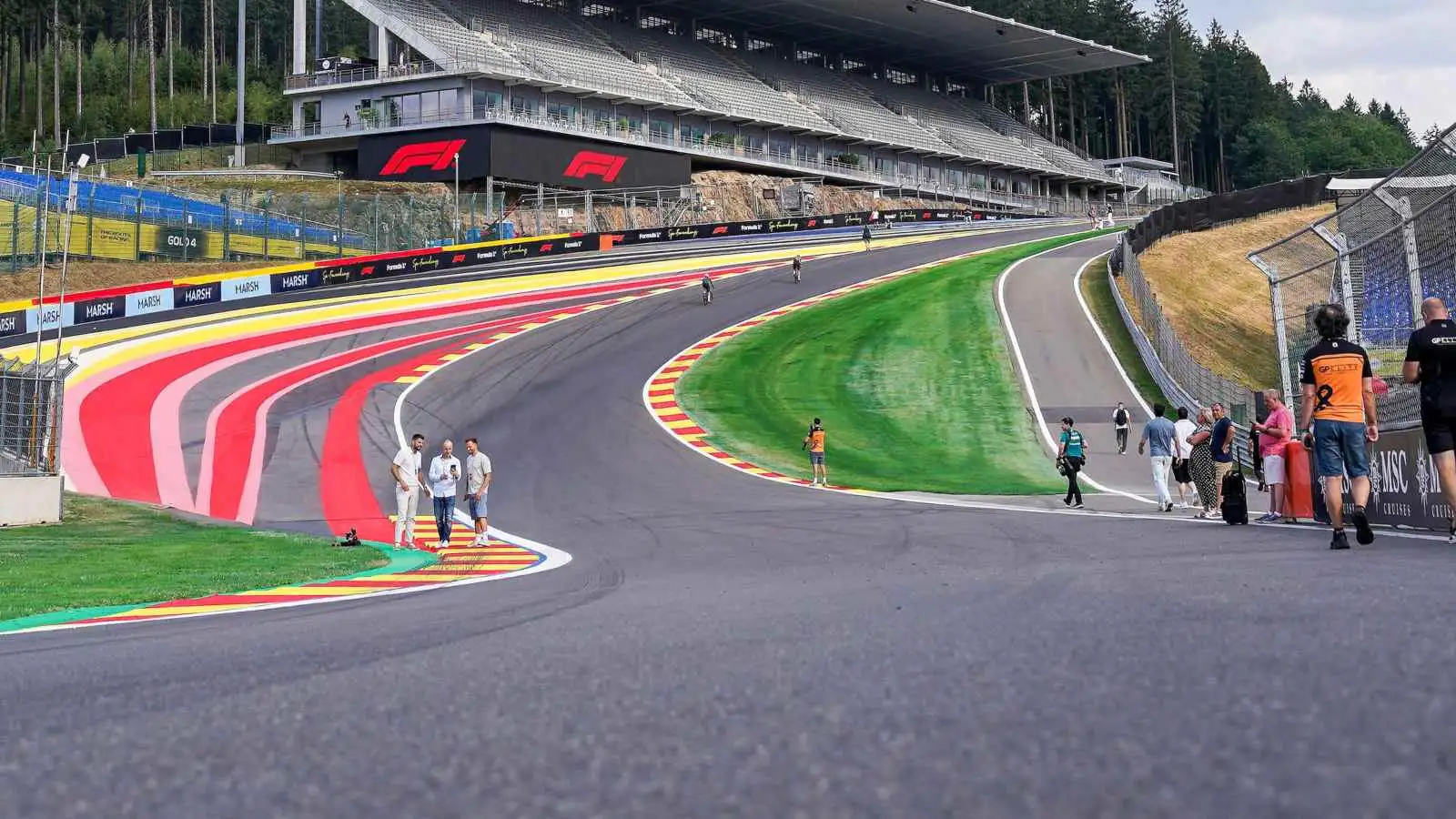
This year’s race Belgian Grand Prix was not the old Spa we are all used to, for the single reason of completely different driving characteristics on this track, and it seems like an effort was made to mask this fact as much as possible.
Legendary track sections like Eau Rouge, Pouhon, the Kemmel straight, and Blanchimont now look completely different, both in qualifying and during the race itself. Let’s break down an apparent lack of transparency and look at the harsh numbers from this year’s race in Belgium.
Belgian Grand Prix telemetry reveals dramatic F1 2026 changes to Spa
Want more PlanetF1.com coverage? Add us as a preferred source on Google to your favourites list for news you can trust.
Even before arriving at this legendary track, which is also a favourite for many drivers, we knew something different from what we are used to awaiting us – however, not this different.
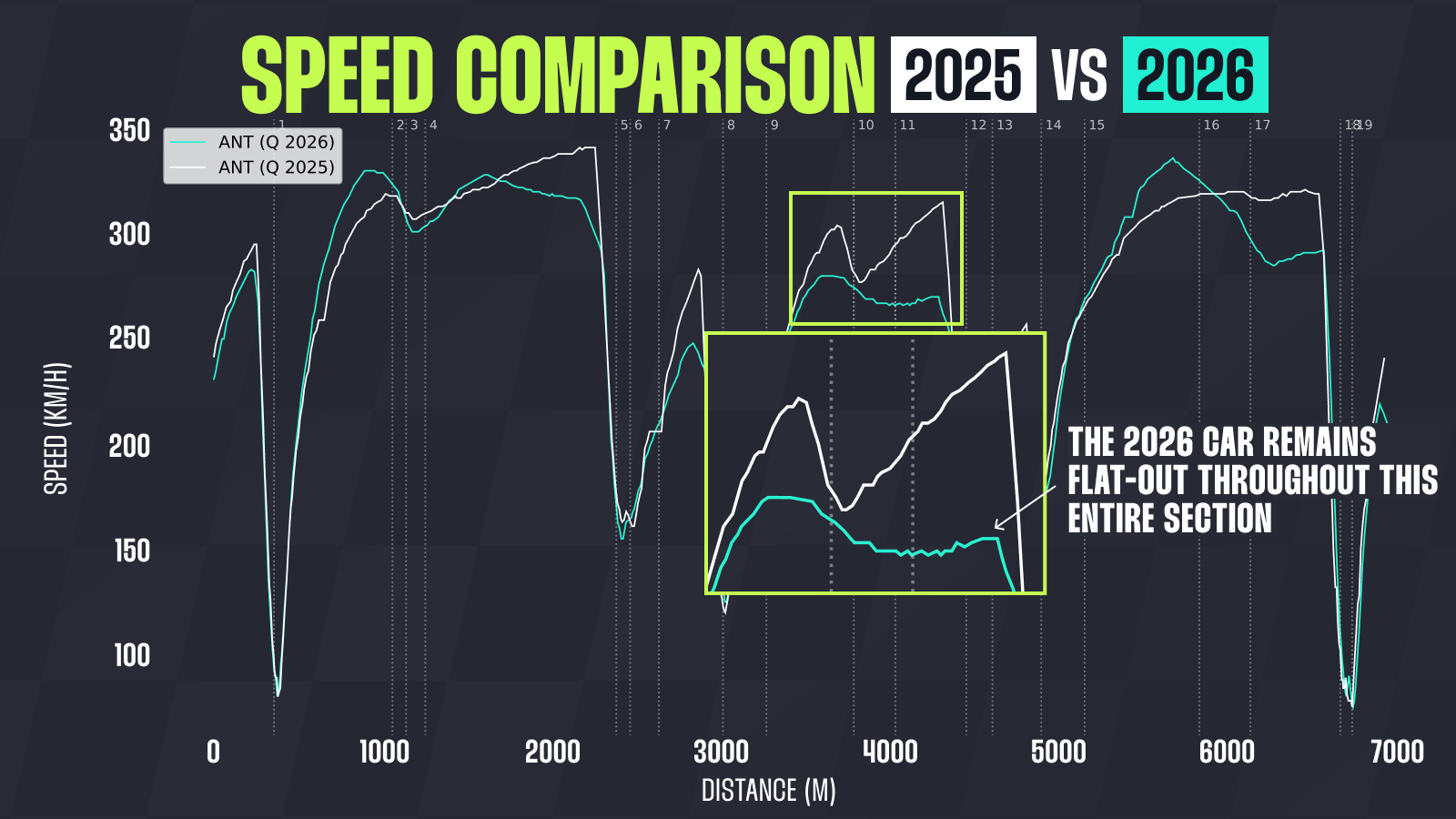
Namely, if you look only at the speed trace throughout the lap, in some sections it looks like a completely different track. The graph below displays this year’s fastest qualifying lap by Antonelli (blue colour) compared to last year’s (white colour).
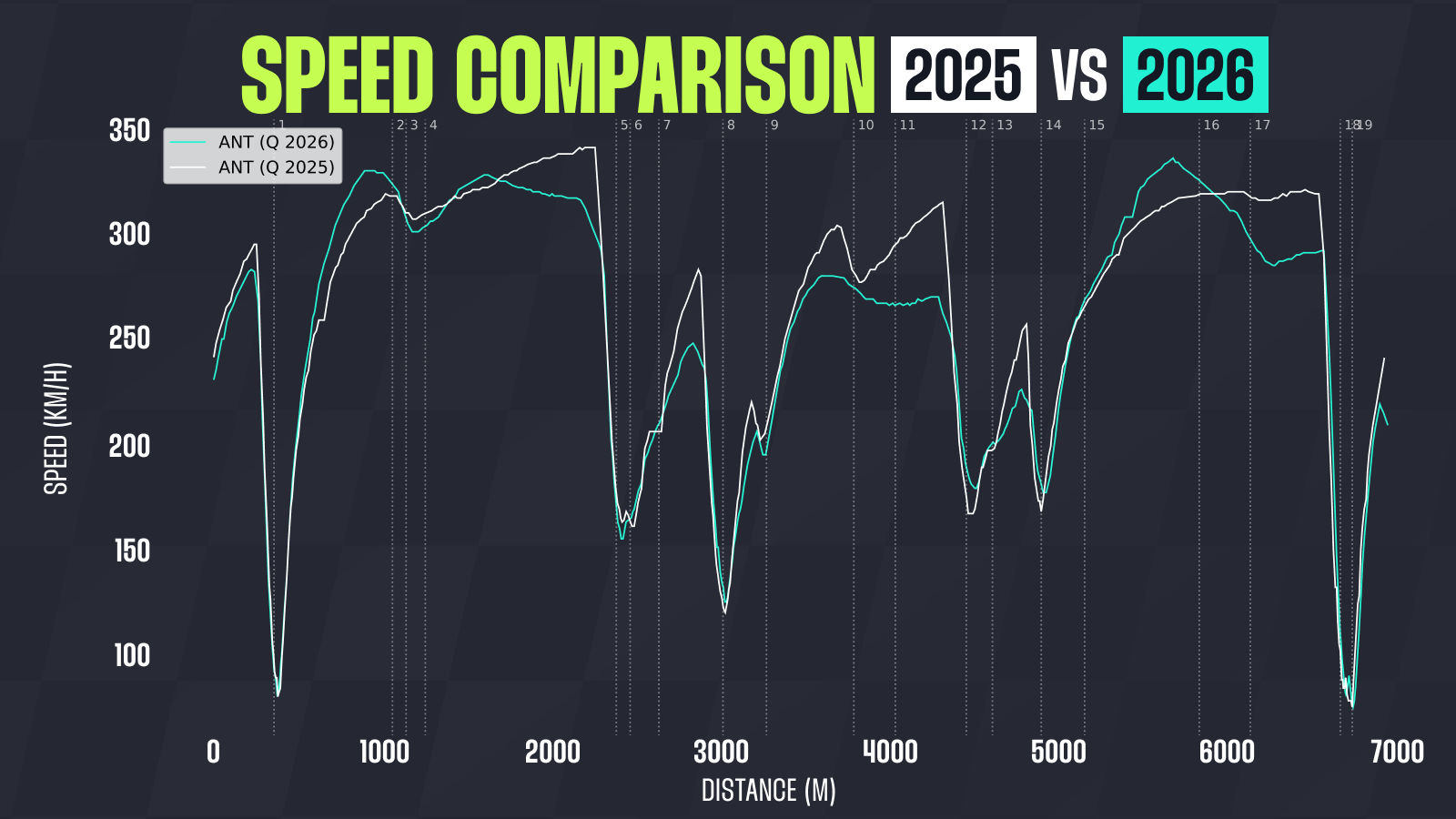
The first huge difference is seen on the Kemmel straight – although the ’26 car accelerates significantly better out of Raidillon, around the halfway point of the straight, the car’s speed begins to drop, and drastically so.
The maximum speed the ’26 car reaches is 328 km/h and at the entry of Les Combes it is 316 km/h, while the ’25 car does not slow down but rather reaches a top speed of 341 km/h right at the entry of Turn 5.
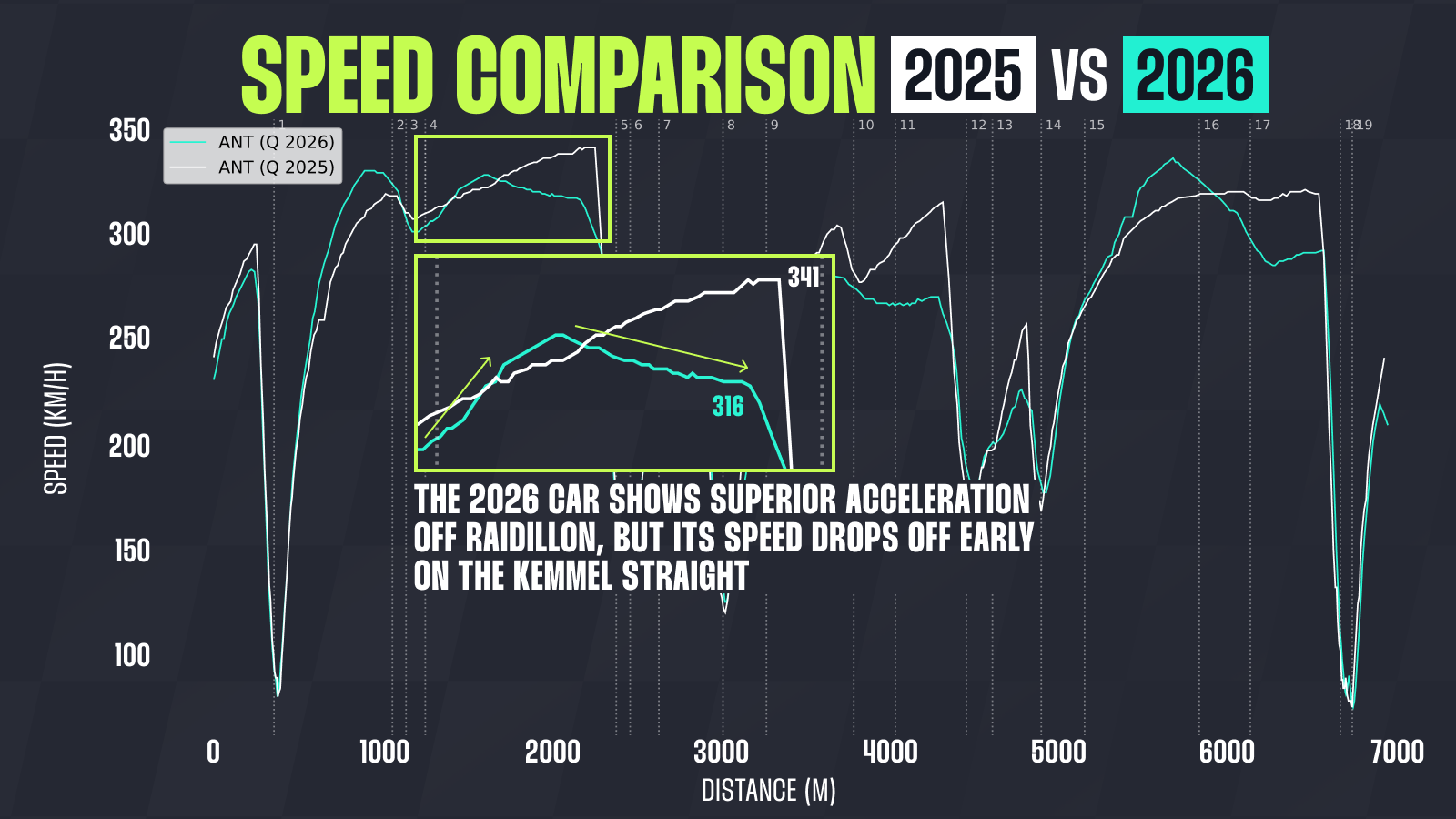
Moreover, the new generation of cars has significantly better acceleration due to increased electrical power deployment, but that is not the case at Spa, which is best seen on the mini-straights after exiting Turn 7 and Turn 13. This year’s car was slower in these sections by 34 km/h and 31 km/h, respectively.
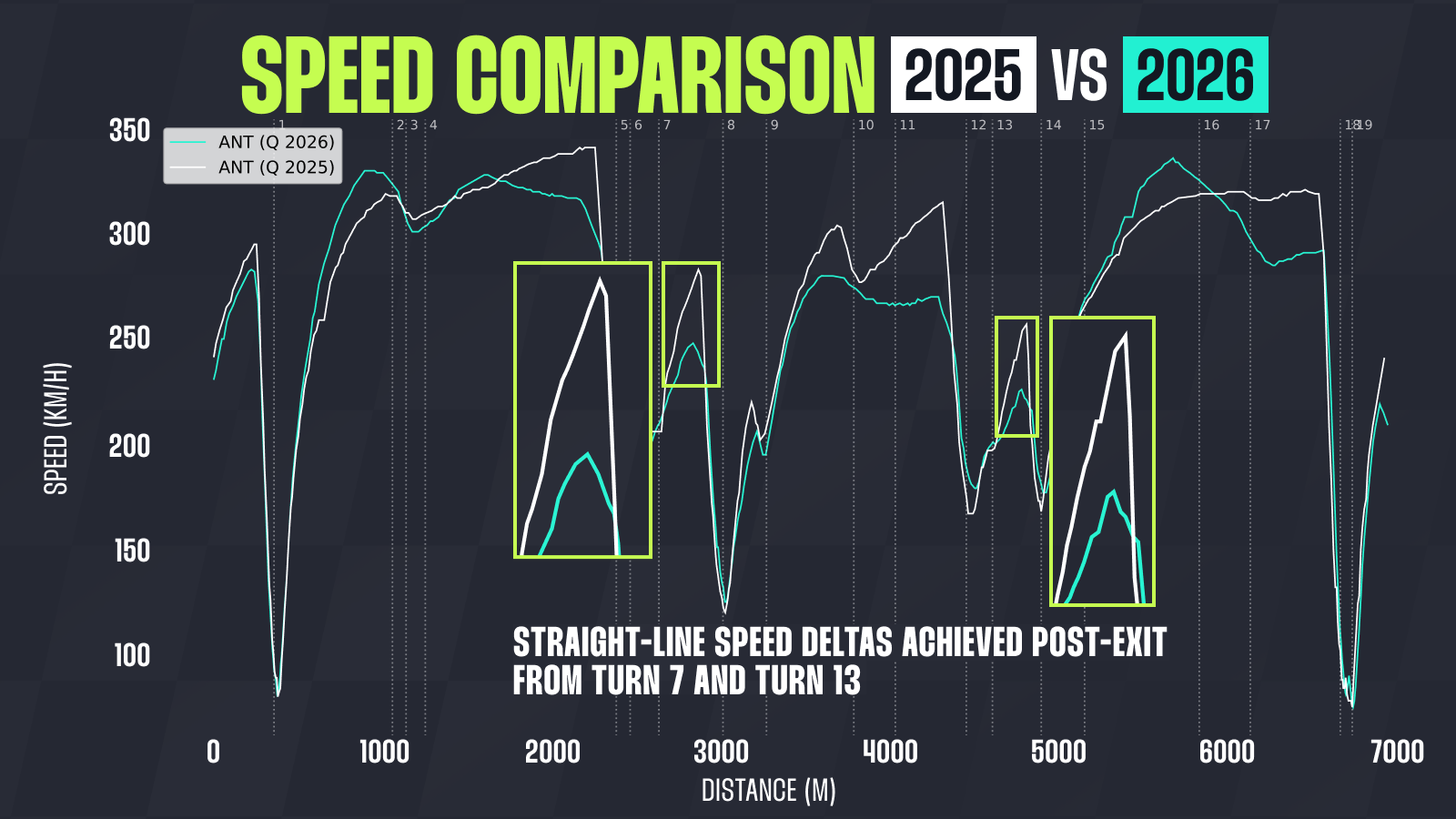
However, one of the most drastic changes is exactly the Turn 10 – Turn 11 section where, if you were to look only at the data, you would think it was two entirely different tracks.
The ’25 car reaches 304 km/h at the entry of Pouhon, brakes, and then accelerates to Turn 12 where it hits a heavier braking zone. On the other hand, the ’26 car maintains a nearly constant speed through this entire section of the track, where it is constantly at full throttle!
Just look at the difference on the graph below and everything will be clear regarding the kind of change we are actually talking about. At the exit of Turn 10, the ’26 car is at full throttle, yet acceleration literally does not exist.
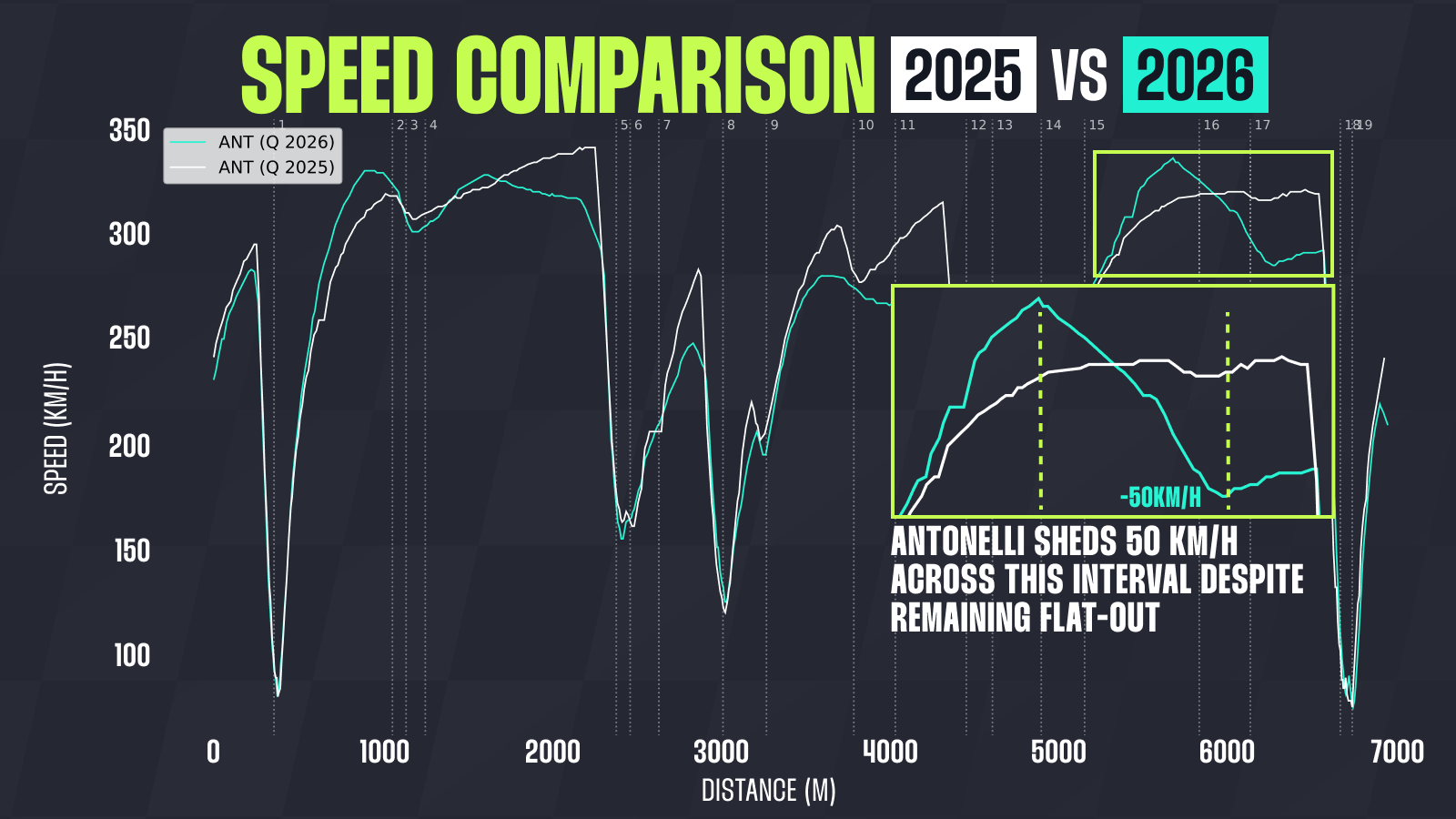
And just when we thought we had reached the peak, we came to the third sector and the full-throttle sections between Turn 15 and the Chicane, which is probably even more absurd.
Namely, both last year and this year the drivers are at full throttle here; however, the ’26 car begins to charge the battery and drop speed before Turn 16, right up until the exit of Turn 17 when it deploys power again.
The speed that this year’s car loses in this section due to battery harvesting is an incredible 50 km/h in Kimi Antonelli’s case. The driver is constantly at full throttle, while his speed drops by 50 km/h!
For comparison, the ’25 car reaches a maximum speed of 320 km/h and it remains literally constant until the Chicane, except for a drop of about 2 km/h while passing through the apex of Turn 17.
We expected a different Belgium, but probably nobody expected the difference to be this massive and for some of the legendary track sections to look like this.
If we analyse the situation during the race, the aforementioned characteristics remain completely the same, with the differences being slightly larger in some places and slightly smaller in others (mostly larger).
Last year’s qualifying lap was about two seconds faster, while the lap times during the race were about four seconds faster.
However, during this year’s race, probably the most striking detail is that Antonelli was downshifting through Raidillon almost throughout the race, which is something very strange to watch.
Following this analysis, it is much easier to understand the drivers’ dissatisfaction, among whom Max Verstappen was once again the one drawing attention to this – though this time, just not as directly as before.
How the Belgian Grand Prix unfolded
Antonelli wins Belgian Grand Prix as Hamilton penalised over Russell DNF
Belgian Grand Prix results: Antonelli wins, Russell DNF disaster
Driving at full throttle while the car automatically adjusts a pre-programmed speed definitely does not sound like the most fun thing for F1 drivers, while watching the same thing on TV screens, or even live from the track, is an equally big disappointment for all fans of the sport.
Whether the data during this year’s Belgian GP was intentionally withheld to try and hide the aforementioned facts is, of course, something nobody can confirm, but the lasting impression is that we had less onboard data this weekend than is usually the case.
Want to be the first to know exclusive information from the F1 paddock? Join our broadcast channel on WhatsApp to get the scoop on the latest developments from our team of accredited journalists.
You can also subscribe to the PlanetF1 YouTube channel for exclusive features, hear from our paddock journalists with stories from the heart of Formula 1 and much more!
Read next: George Russell ‘numb’ after Lewis Hamilton collision as Mercedes issue sparks anger
Originally published by Planet F1 —
Read Original Article