

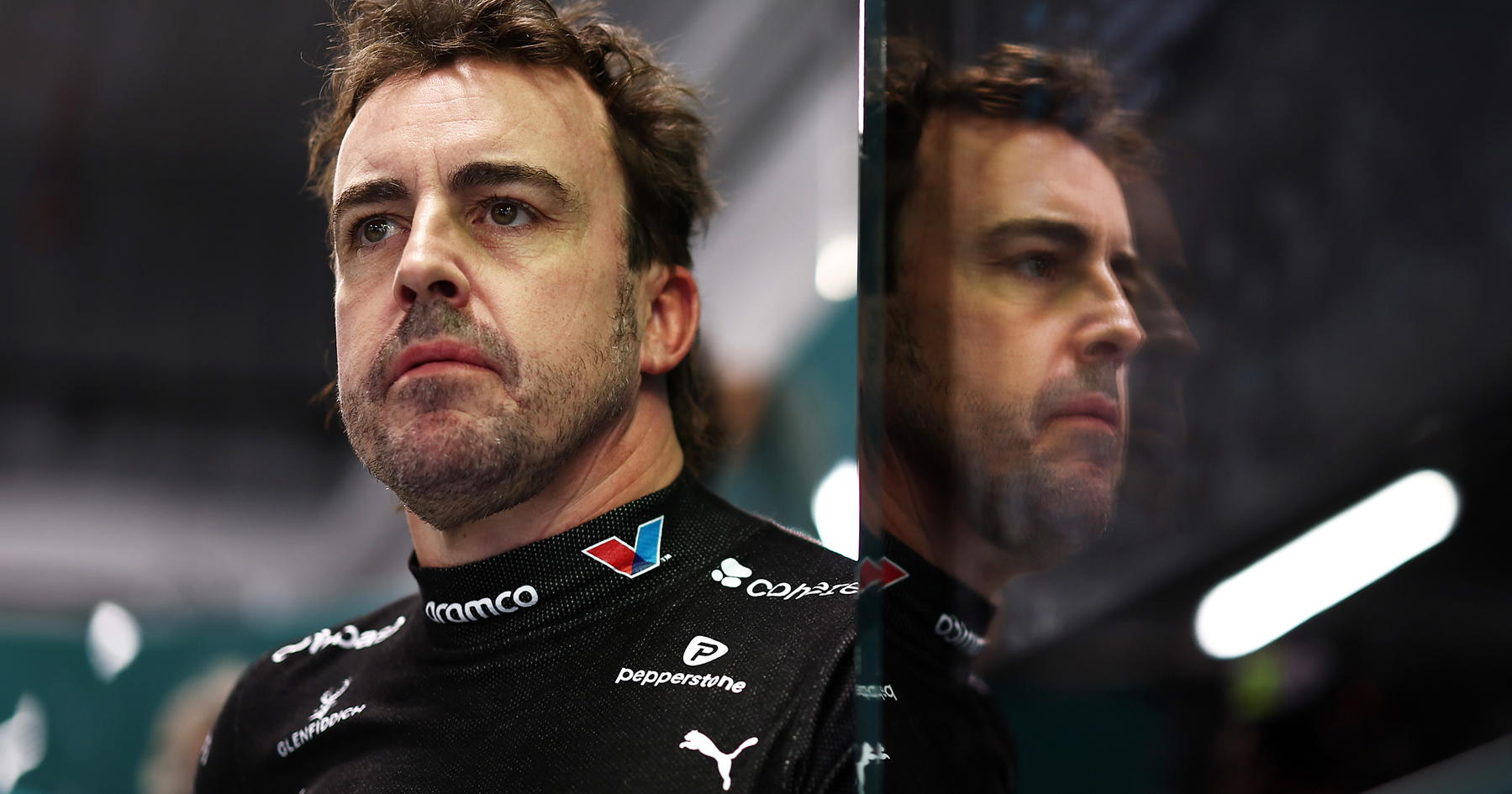
Fernando Alonso believes there must be "fixes and improvements" made to F1's all-powerful power unit algorithms.
For the new generation of complex engines in 2026, computer algorithms are central to how energy is deployed through a lap, with the system constantly learning and evolving on how to best deploy the 50% of power output from the batteries.
It means that any snap of oversteer, or if a driver is too aggressive when putting in the throttle on corner exit, could disrupt the system and cost them to a rival driver.
Drivers are unable to control the deployment themselves, with Alonso believing that whilst F1 had "always been a little bit like that" - pointing to traction control in the mid-2000s - the 2026 computer algorithms require change.
"I think Formula 1 has always been a little bit like that. I don’t think the drivers were deciding everything, even when we had traction control and some of the other aids," Alonso told media, including RacingNews365 when asked if the algorithms meant the driver was not driving the car "alone and unaided" as per the regulations.
"It was very specific to each team, developed by each team in a different way, with different philosophies. You were pressing the throttle at the exit of the corners, and some cars were much better than the others. It’s not pure driver talent or input on some of the exits.
"It’s the same with the starts. I’ve been doing starts for 25 years, and we’ve had many different regulations. At the end of the day, there were always some cars and some teams starting better than the others, with both cars. It’s not just that someone was doing something differently with the clutch, with a technique or with the throttle application.
"Both cars from that team were extremely good or extremely bad. I think the team is always bringing the performance to everything. But yes, I think with these current regulations and the battery deployment, there is something that has to be fixed and improved [with the algorithms].
"I think that’s well understood. We are in the first half of this set of regulations, in the first year, and there are already talks about 2030 or 2031 and the V8. Next year, there is already approval for the change to the combustion versus electrical part of the engine.
"There are things moving forward, and it’s well understood by the sport, by the teams and by everyone. I’m optimistic for the future that it will get better and that it will be better understood what the rules are and what the cars need to be."
Never miss a thing from the Formula 1 season! Add the 2026 F1 schedule to your calendar at the touch of a button. Subscribe below and put the dates and times of every race directly on your PC or smartphone, so you don't miss a second from the new season.
Download the F1 calendar Download the F1 calendarOriginally published by RacingNews365 —
Read Original Article