

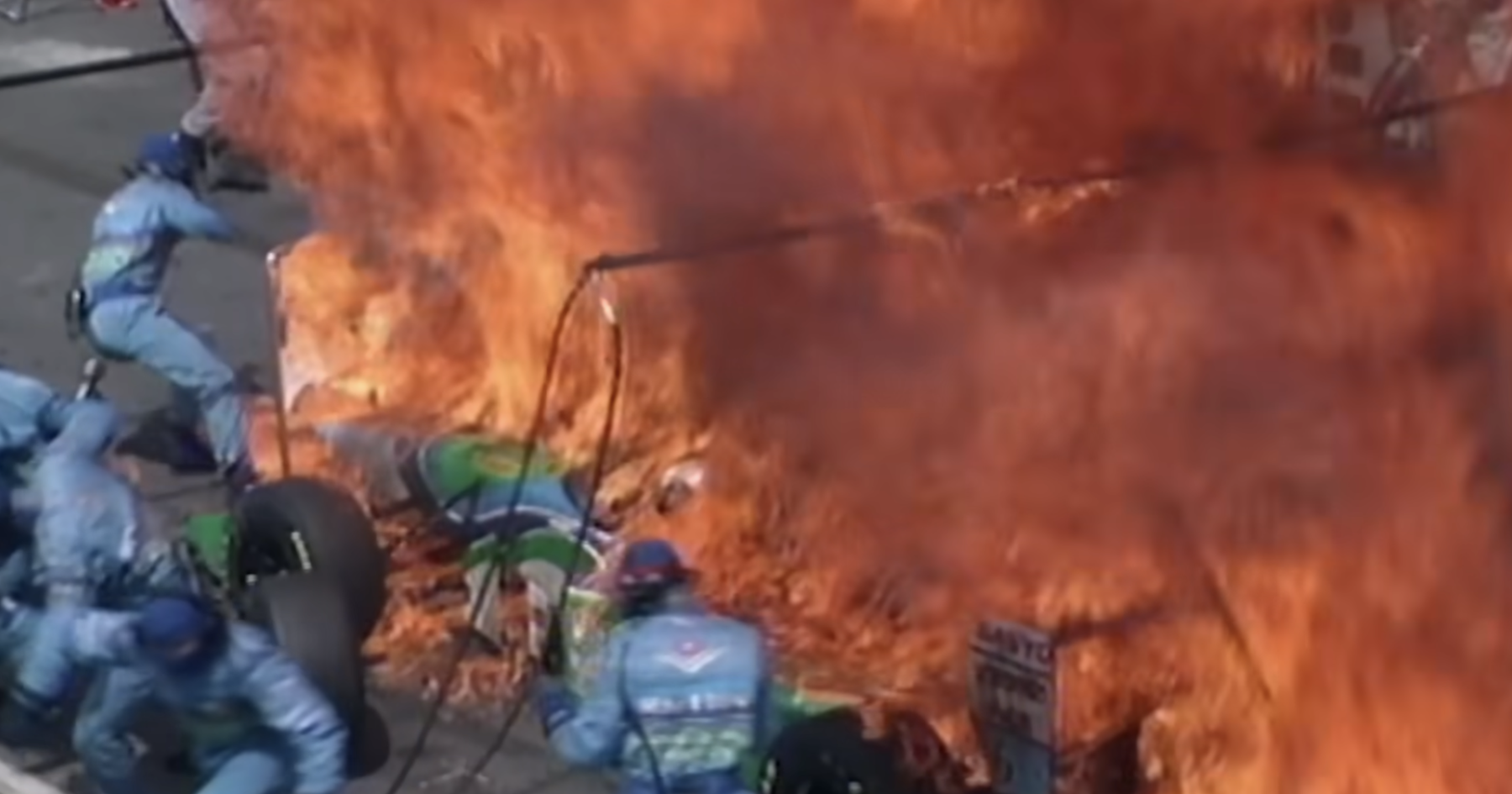
It remains one of the most shocking images in Formula 1 history: Jos Verstappen's Benetton B194 engulfed in a fireball during a routine pit stop at the 1994 German Grand Prix.
Around one-third of the distance at Hockenheim, Verstappen pitted for fuel. As the Intertechnique refuelling nozzle was connected, pressurised fuel sprayed onto the car's hot bodywork and rear brakes, igniting instantly.
The blaze lasted only a few seconds before crew and marshals extinguished it, but the damage was done. Verstappen, whose visor was slightly open, a common practice at the time, suffered minor burns around his nose and eyes.
Several mechanics were also burned, though none seriously.
"You're in the car, suddenly the whole car goes up in flames and you can't really do anything. You panic," Verstappen later recalled. "I must say the team had it under control very quickly; after a few seconds the fire was out."
The FIA investigation that followed uncovered a damning detail: Benetton had removed a safety filter from the fuel valve, increasing flow rate by approximately 12.5% and saving roughly one second per stop.
Without that filter, a foreign body was able to jam the valve, preventing it from closing properly and allowing fuel to spray uncontrollably. Benetton were fined, though the team maintained the filter removal was not the direct cause.
The fallout reshaped pit stop regulations as fuel delivery hoses were re-engineered with fail-safe cut-out mechanisms to stop flow instantly in the event of a malfunction.
Mandatory fire-protective clothing and upgraded headgear became compulsory for all pit-stop personnel. Teams were required to run refuelling rigs in their standard, approved configuration, with stricter FIA oversight of any modifications.
The incident also fed the broader case against in-race refuelling, which was ultimately banned from 2010 onwards.
Originally published by RacingNews365 —
Read Original Article