

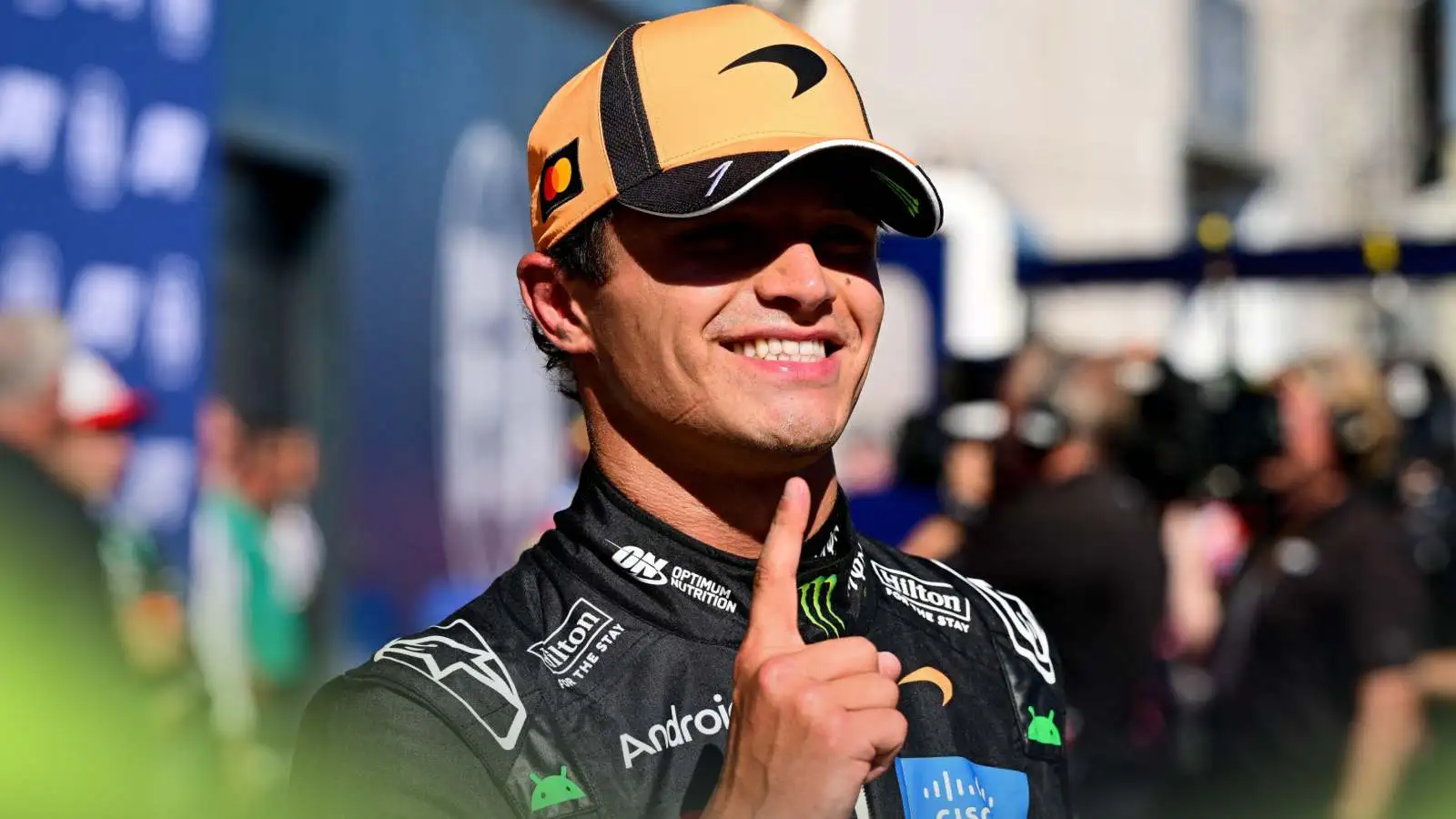
Following what he described as one of the best laps of his career at the Spanish Grand Prix, Lando Norris claimed his third pole position of the F1 2026 season at the brand-new circuit in Madrid.
How the reigning world champion came within a hundredth of a second of throwing away his finest lap, and where Ferrari disappeared to in qualifying once again, we discover with the help of telemetry data.
How good was Lando Norris’ lap, really?
Qualifying at the Madring was truly spectacular.
In what was arguably the most critical session of the weekend, we ended up with four drivers from four different teams occupying the top four spots on the grid – underlining just how much driver performance dictates results at this circuit.
The reigning world champion emerged on top at the flag, a complete surprise after Mercedes and Ferrari had dominated the practice sessions.
But what the timing screens conceal is just how special Lando’s lap actually was.
It is worth noting that Lando ranked no higher than P4 in any of the practice sessions or the first two segments of qualifying.
He saved his absolute best for when it mattered most.
A comparison between his pole lap and Antonelli’s – which was just 0.011 seconds slower – reveals that Norris built his advantage right in Sector 1, an area where McLaren had consistently struggled all weekend.
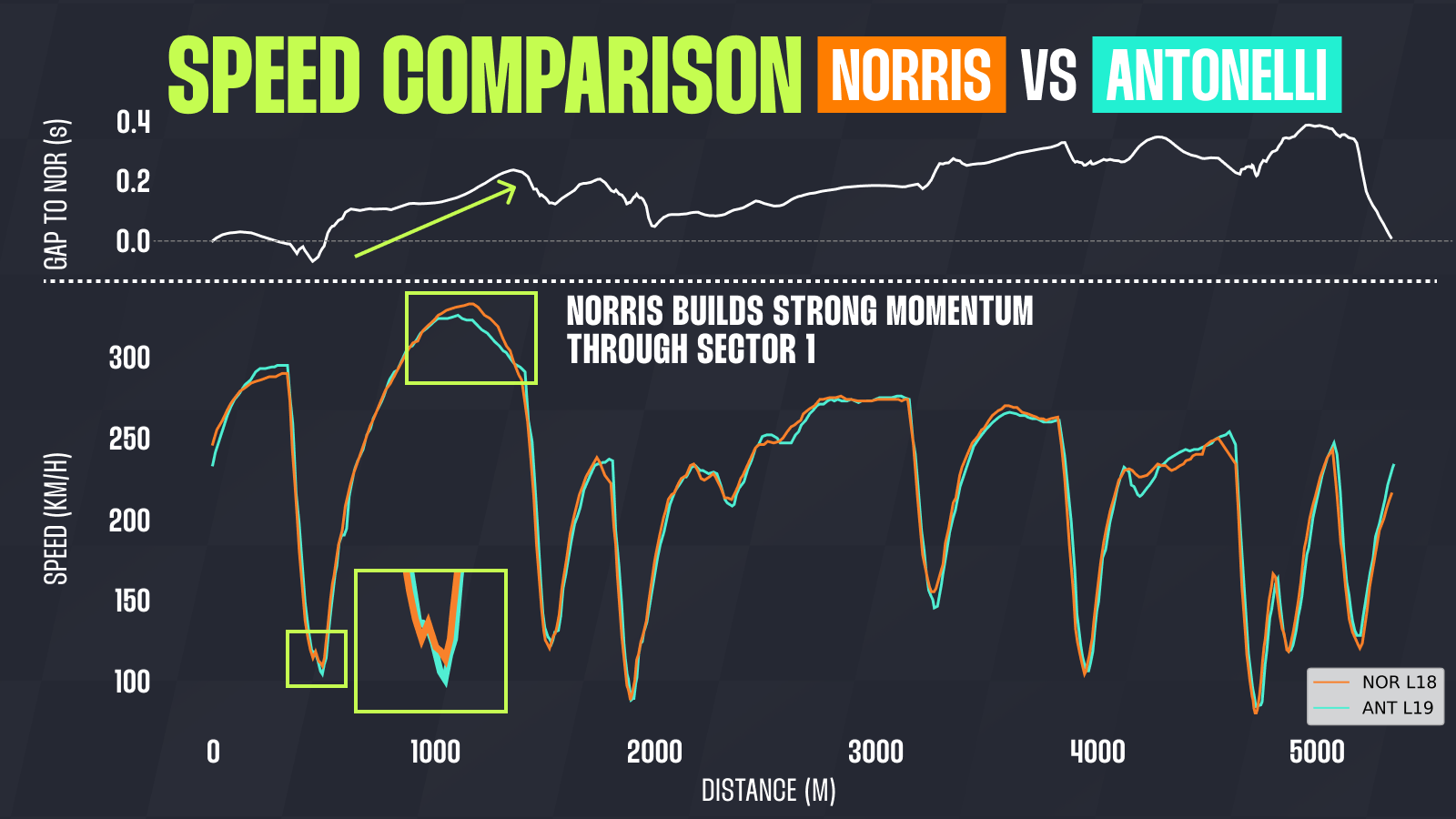
His entry into the first chicane was sublime, while electrical energy deployment down the straight pushed his initial margin out to around 0.1 seconds.
The run up to La Monumental and through the corner itself was dead even between the two drivers, up until Turn 13.
Although Kimi suffered a scruffy entry through Turn 13, Lando was exceptionally quick, adding another tenth of a second to his lead.
This allowed him to carry extra speed and momentum into the high-speed Turn 14 and Turn 15 sequence.
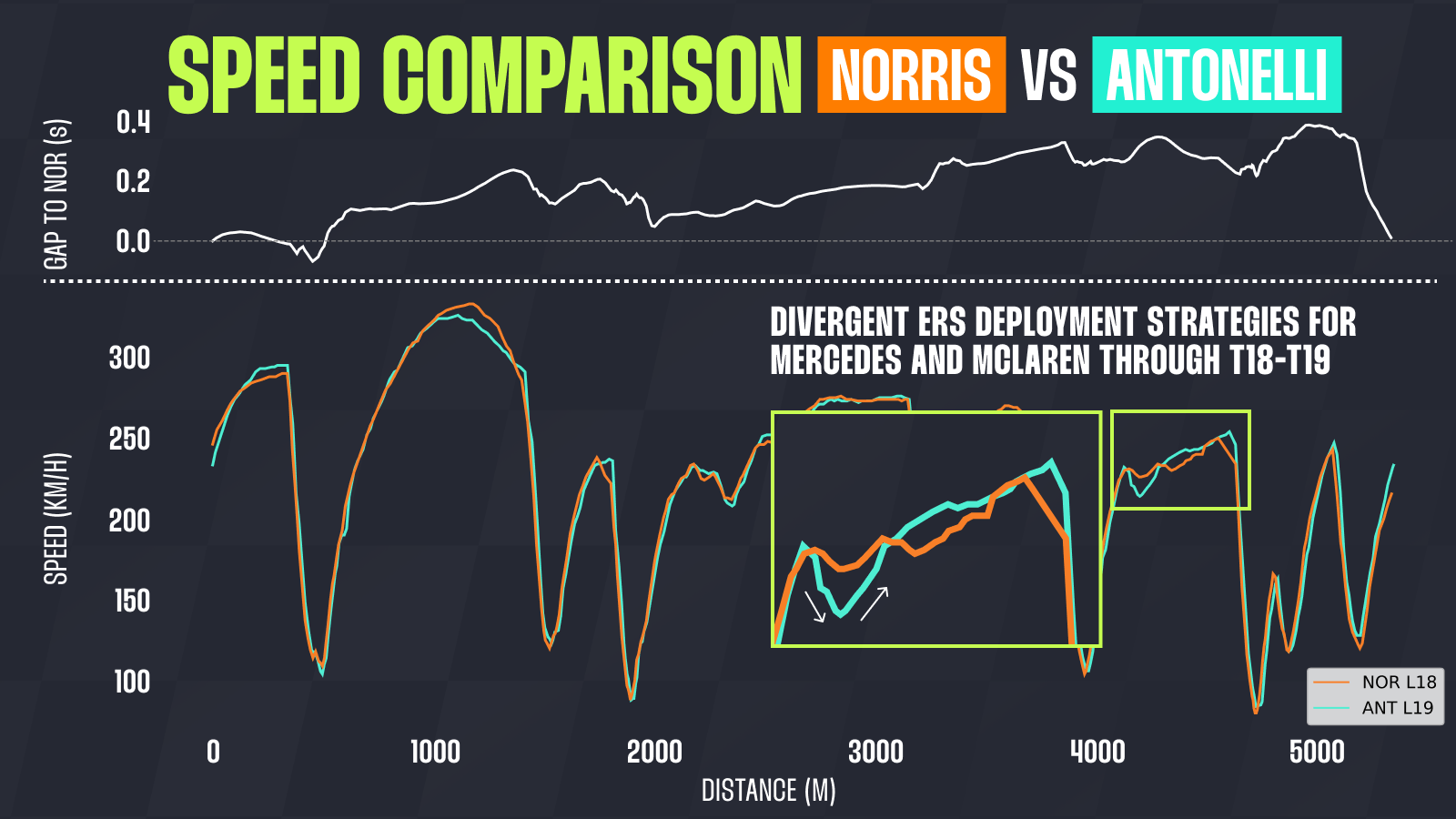
In this section of the track, it is intriguing to observe opposing deployment strategies through Turn 18 and Turn 19.
In Turn 18, Mercedes chose to harvest energy, whereas the roles reversed in the following corner; nevertheless, the overall delta remained virtually identical.
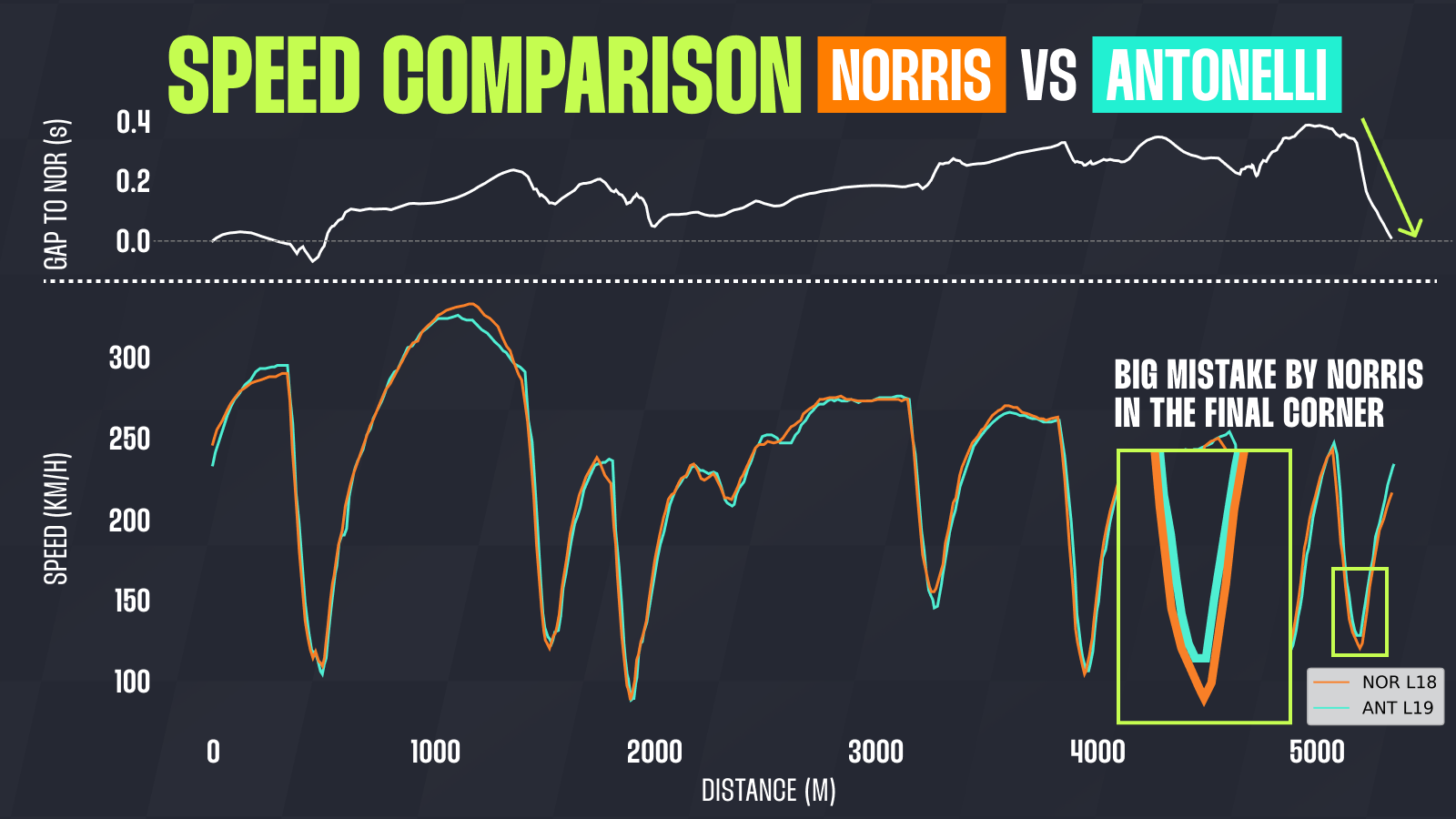
Following a phenomenal run through Turn 20 and Turn 21, Norris held a massive lead of just under 0.4 seconds.
And he came dangerously close to throwing it all away with a mistake in the final corner.
He briefly suffered a snap of oversteer on entry to Turn 22, causing a severe drop in apex speed and compromising his traction on the run to the finish line.
On the telemetry trace, this is strikingly evident as the delta line suddenly plummets at the very end of the lap.
Had the track been just a few metres longer, Norris almost certainly would have surrendered pole position to Antonelli.
However, the error was just small enough not to ruin an otherwise masterly lap across the circuit’s 21 preceding corners.
He even breathed a sigh of relief after the session, saying in the post-qualifying press conference: “You’re pushing on the limit. You have some moments for sure.
“My last corner on my last lap, I thought I was in the wall. That was just from over-pushing the entry and getting a bit keen on brake point.”
It is also worth highlighting that Lando was not the only driver to commit a costly error in Turn 22 – Max Verstappen belongs to that club as well.
The Dutchman was holding a relative position ahead of Kimi all the way up to the final corner, only to lose it in the final few metres of the lap.
Had that mistake not occurred, there is a very real chance Max would have snatched pole position instead.
That, however, takes nothing away from a stellar drive that extracted the absolute limit from his car.
Red Bull occupies middle ground regarding energy deployment strategy: their Sector 1 top speeds are lower, akin to Mercedes, but through La Monumental and the Turn 14–15 complex, they are the most aggressive on the grid.
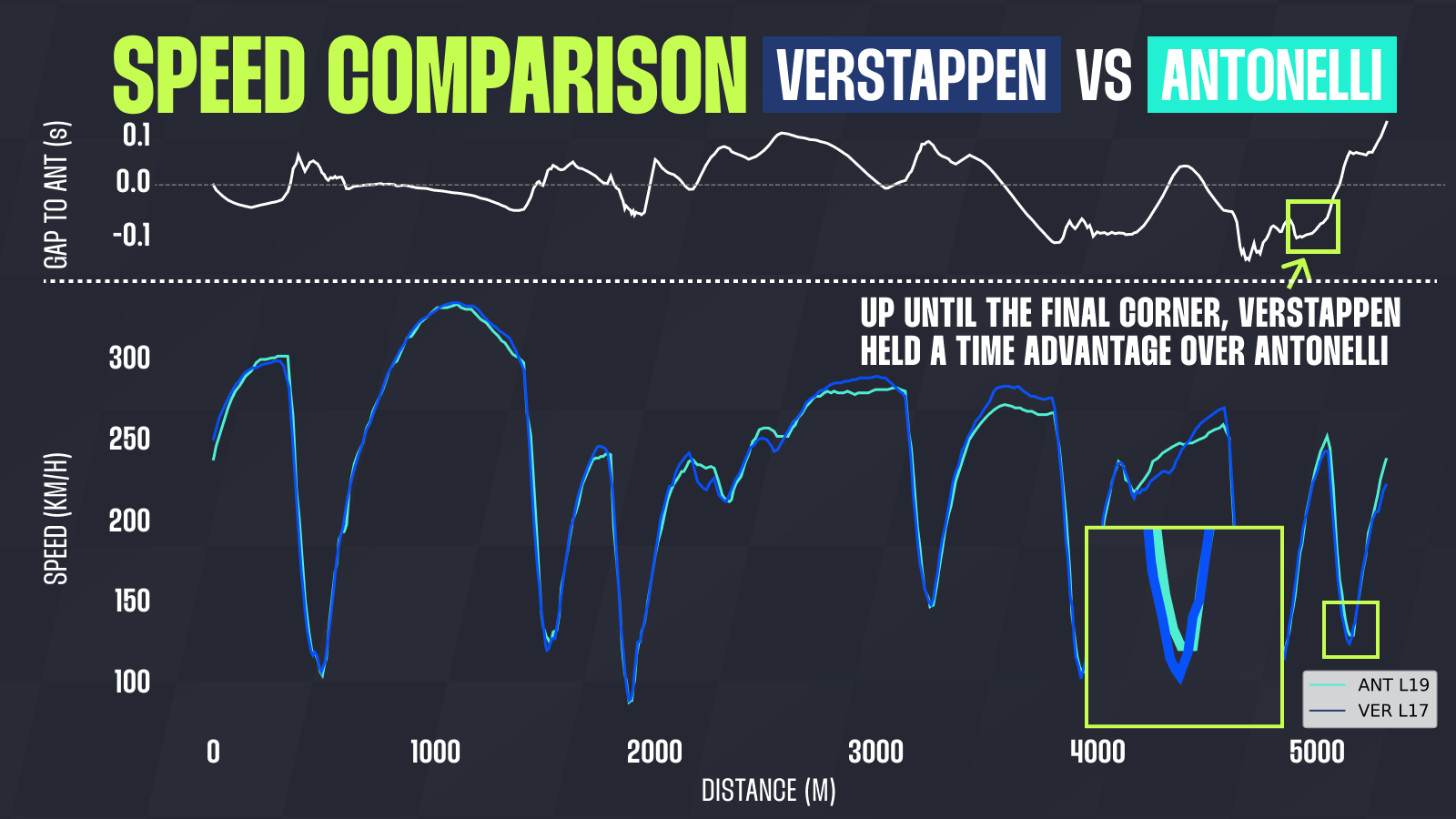
Where Max truly shone was in the low-speed corners; telemetry shows him clawing back time on Lando in virtually every slow-speed turn on the track – except for the final one.
And these mistakes in the final corner are by no means coincidental.
As seen with Hamilton’s error in FP3, this circuit places extreme thermal stress on the tyres.
By the time drivers reach Sector 3, the soft compound is practically cooking, making it an art form to wring out maximum performance without crossing the threshold into a mistake.
More from the Spanish Grand Prix weekend
F1 2027 calendar announcement imminent as Middle East plans surface
Red Bull set Isack Hadjar comeback target after Madrid absence
Where did Ferrari falter and why did the Scuderia underperform again?
We fully expected Ferrari to join Mercedes in the fight for pole position, yet reality showed the Maranello squad once again missing out on the front row and a genuine shot at victory.
The area where they lost the most time was Sector 1. While neither driver made an obvious error, the opening portion of their laps simply lacked punch.
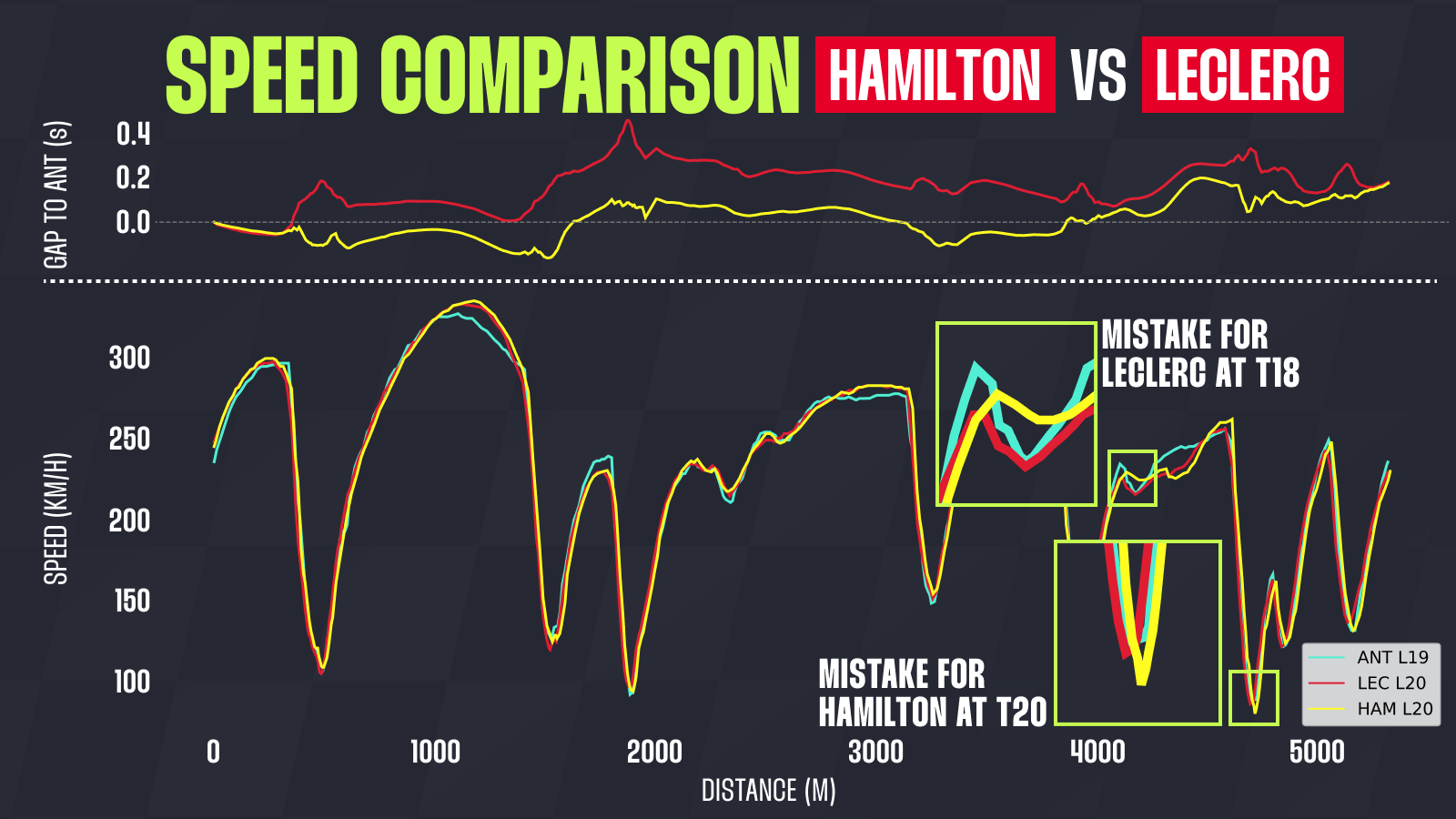
Leclerc left room for improvement in Turn 18, while Lewis could have done better through Turn 20 and the final corner – where a weak exit almost cost him position to his teammate, despite having been consistently faster throughout the rest of the lap.
Additional reporting by Thomas Maher
Want to be the first to know exclusive information from the F1 paddock? Join our broadcast channel on WhatsApp to get the scoop on the latest developments from our team of accredited journalists.
You can also subscribe to the PlanetF1 YouTube channel for exclusive features, hear from our paddock journalists with stories from the heart of Formula 1 and much more!
Read next: F1 starting grid: What is the order for the 2026 Spanish Grand Prix?
Originally published by Planet F1 —
Read Original Article