

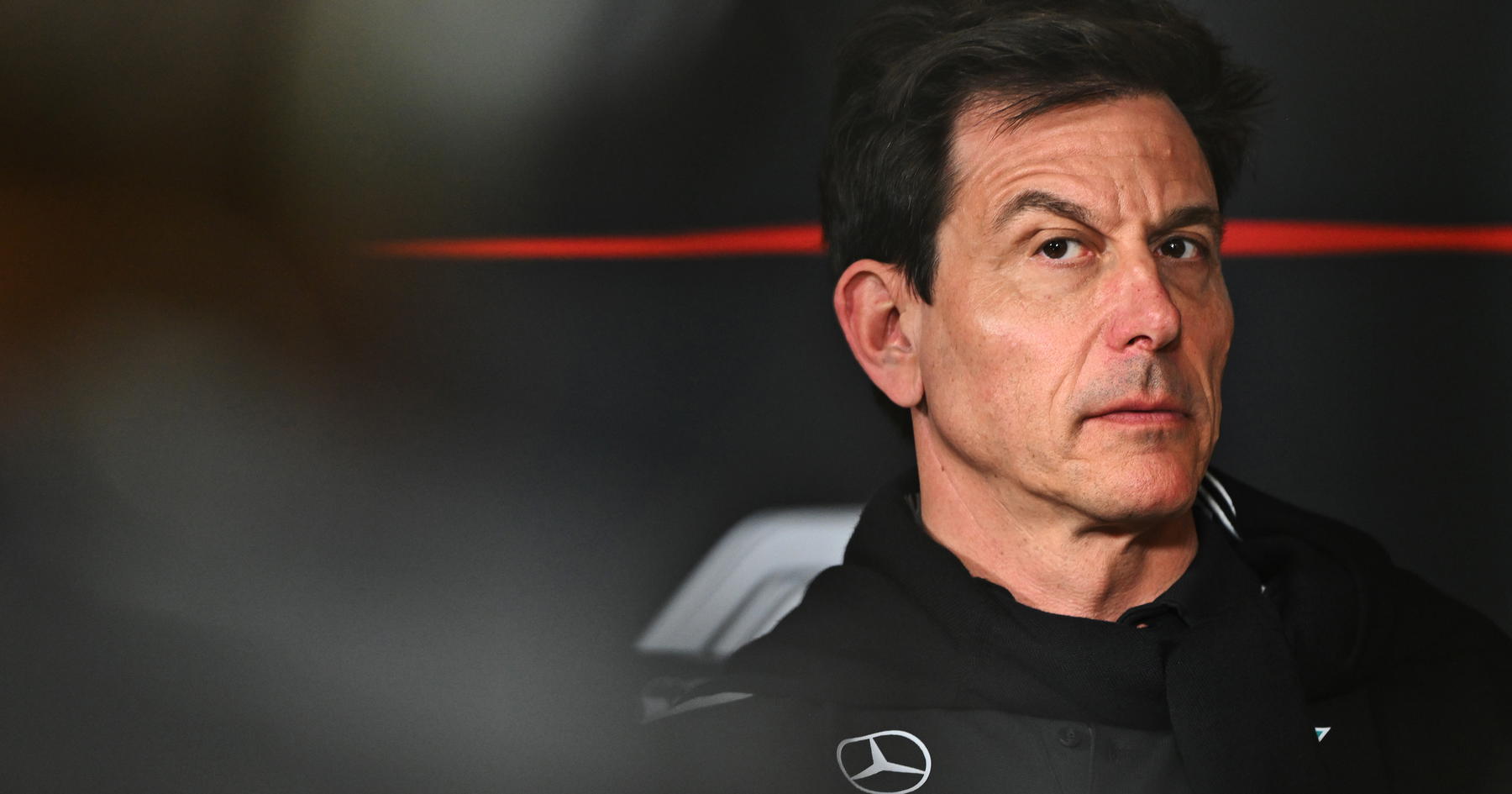
Toto Wolff has signalled Mercedes' approval for a key change to F1's power units from the 2027 season.
The key central pillar of the new 2026 engines, a 50:50 split in power output between the internal combustion engine and the beefed-up 350kw battery systems.
However, across the first races, the weaknesses in this were shown with super-clipping and lift and coast, particularly prevalent during qualifying with drivers unable to go flat-out to avoid running out of energy.
Fixes were put in place for the Miami GP, but for 2027, senior figures, including the Power Unit Manufacturers, have discussed changing the ratio to 60:40 in favour of the ICE, thus reducing reliance on the batteries.
For it to be implemented, a supermajority on the Power Unit Advisory Committee is required, a body on which are F1's five PUMs - Audi, Honda, Ferrari, Mercedes HPP, and Red Bull Powertrains, and F1 and the FIA. A supermajority is four of the five PUMs plus both F1 and the FIA.
Honda has indicated it is open to whatever the FIA decides to do, but it is understood that both Audi and Ferrari are currently against the proposed 60:40 change, with Audi especially perturbed by heavily investing in the 50:50 split only for it to be changed with a year.
Wolff, whose Mercedes team are powered by the class-leading power units from Mercedes HPP, has now declared that he would be in favour of implementing the 60:40 change.
"Well, it is easier to talk from my position, but I think the races are pretty entertaining," Wolff told media, including RacingNews365, following the fierce battles between his drivers in Montreal.
"Obviously, the Montreal track layout helps in terms of energy, but I think the changes that we have anticipated, all of us, in adding more power and helping the energy deployment, these are good changes.
"They mean a compromise from each of the engine manufacturers, but it looks like a sensible approach, but we haven't voted on them."
Originally published by RacingNews365 —
Read Original Article