

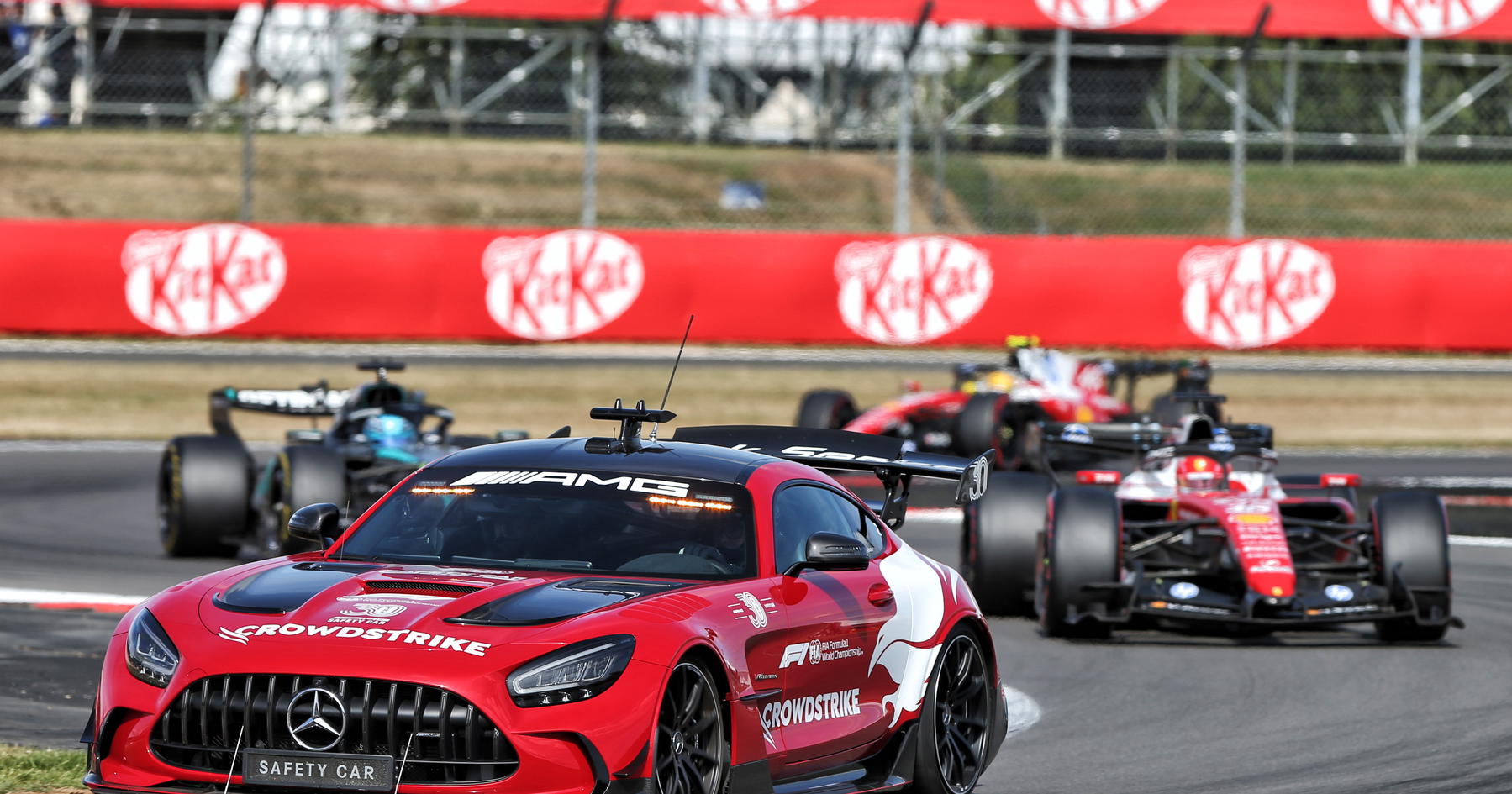
The British Grand Prix at Silverstone delivered a thrilling spectacle, but not without its share of controversy. The race concluded under the safety car, a decision that sparked debate among drivers, teams, and fans alike. George Russell, a prominent figure in the paddock, defended the FIA's choice, emphasizing the complexities of race safety protocols.
As the dust settles on the event, Kimi Antonelli's performance stands out. Starting from pole position, the young driver faced a series of challenges that ultimately thwarted his victory aspirations. Reliability issues and a late penalty marred what could have been a triumphant day for the Mercedes driver, highlighting the unpredictable nature of motorsport.
FIA's Safety Car Decision Under Scrutiny
The decision to end the British Grand Prix behind the safety car has drawn mixed reactions. George Russell's defense of the FIA's actions reflects a broader understanding of the safety concerns that govern Formula 1. However, Otmar Szafnauer, team principal of Alpine, argued that the FIA should have red-flagged the race following Max Verstappen's late retirement, suggesting that the situation warranted a more decisive response.
Martin Brundle, a former driver and now a commentator, echoed these sentiments, calling for a revision of the FIA's safety car regulations. He proposed several changes to prevent races from concluding in such an anticlimactic manner, emphasizing the need for a balance between safety and competitive integrity.
Kimi Antonelli's Missed Opportunity
Kimi Antonelli's journey during the British Grand Prix was a rollercoaster of emotions. Starting from pole position, he was well-positioned to secure a significant victory. However, a series of reliability problems and a five-second time penalty during the closing stages of the race dashed his hopes. Martin Brundle noted that unclear communication regarding a wheel shield issue also played a role in Antonelli's struggles, suggesting that better clarity could have altered the race's outcome.
Despite these setbacks, Otmar Szafnauer highlighted the importance of learning to manage a compromised car, drawing parallels to the legendary Michael Schumacher. For Antonelli, this race serves as a crucial lesson in resilience and adaptability, essential traits for any aspiring champion.
What's Next for F1?
Looking ahead, the FIA faces pressure to refine its safety protocols to enhance the racing experience. The call for changes to safety car regulations is likely to gain traction, especially after the British Grand Prix's controversial finish. Meanwhile, Kimi Antonelli's experience will undoubtedly shape his approach in future races, as he seeks to convert potential into performance.
As the season progresses, fans can expect heightened scrutiny on both FIA decisions and driver performances, making for an exciting and unpredictable championship race.
Key Takeaways
- George Russell defended the FIA's decision to end the race under safety car.
- Otmar Szafnauer called for a red flag after Verstappen's retirement.
- Kimi Antonelli faced reliability issues and a penalty at Silverstone.
- Martin Brundle urged the FIA to revise safety car regulations.
- Antonelli's pole position was overshadowed by missed opportunities.
Sources
- RacingNews365: FIA defended over key Silverstone call: 'It is a shame, but what can you do?'
- Crash.net: Martin Brundle highlights valuable F1 lesson for Kimi Antonelli after Silverstone ‘heartbreak’
- Motorsport.com: Martin Brundle points to Kimi Antonelli lesson after "heartbreaking" British GP
- PlanetF1: One Michael Schumacher trait could transform Kimi Antonelli
- Motorsport.com: FIA British GP decision questioned as former Alpine boss offers alternative
- motorsportweek.com: Mercedes confirms cause of shock Kimi Antonelli F1 British GP car failure
- Motorsport.com: Kimi Antonelli told key Michael Schumacher lesson he needs to learn in F1 title fight
- PlanetF1: F1's Safety Car finish sparks debate as Jenson Button and Martin Brundle clash on solutions
- RacingNews365: Martin Brundle calls for F1 rule change after 'heartbreak' for Kimi Antonelli
- Motorsport.com: Martin Brundle proposes three fixes to avoid F1 safety car finishes after British GP