Formula ReportFormula Report

Search

Oliver Bearman relishing 'never before' F1 challenge after 'hell' breakthrough
racingnews365.com·

Oliver Bearman relishing 'never before' F1 challenge after 'hell' breakthrough

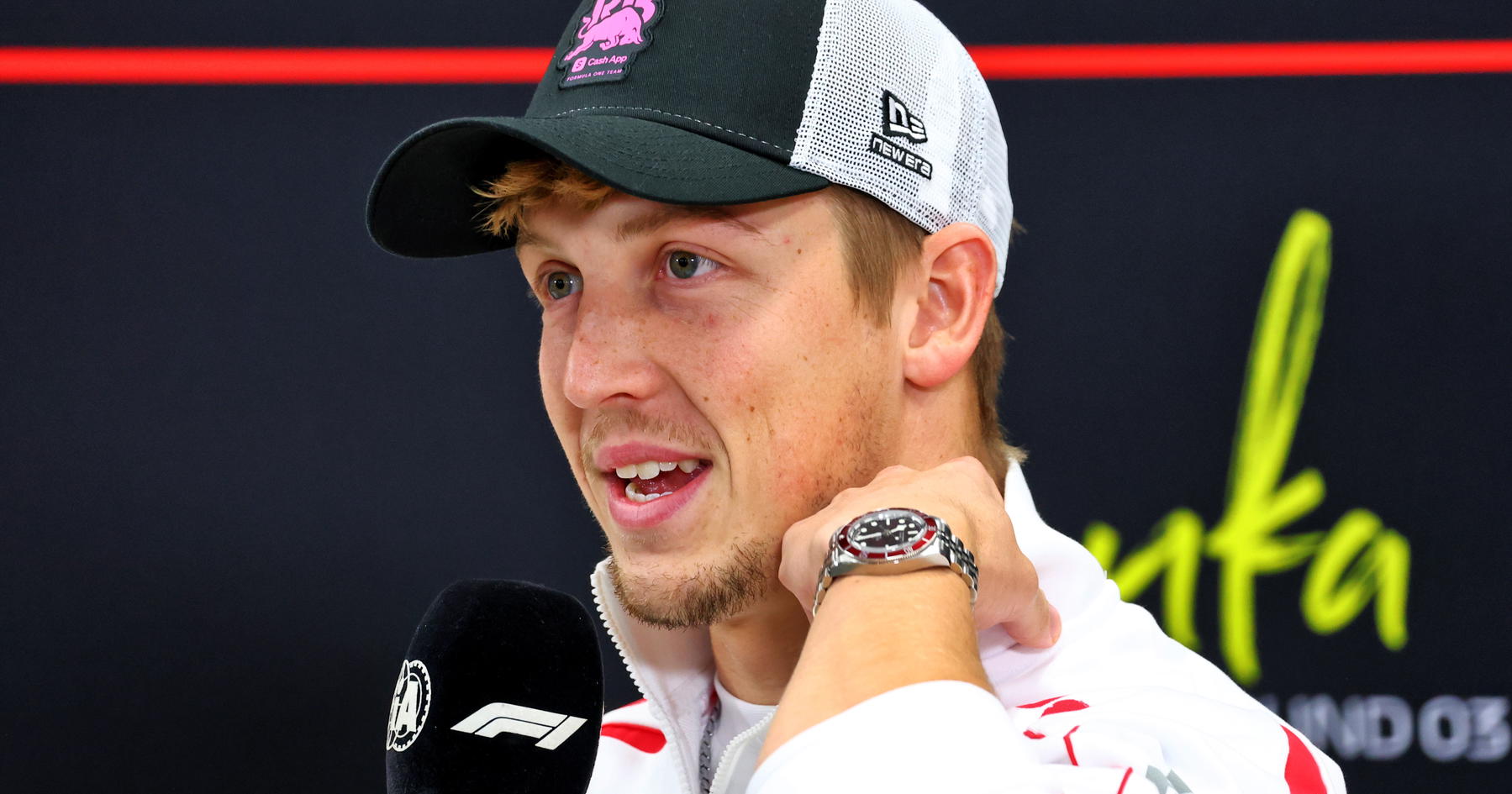
Oliver Bearman has described his excitement at being able to develop an F1 car from scratch for the first time after making a "hell" breakthrough in Barcelona. The Haas driver logged 106 laps on the final day of the test, to go with the 85 from team-mate Esteban Ocon as the team overcame some reliability woes on Wednesday to end the first test strongly. For Bearman, 2026 marks the first time in his career he has undergone a regulation change in the formula he is driving, having risen through the spec junior categories before making his full-time debut in the final year of the ground effect design. Recounting his week, the Ferrari-backed Briton described his excitement at being able to tackle the rule changes after making a sizeable breakthrough in his understanding during the shakedown. "We had the issues on Wednesday at the end, they weren't big problems, they were all ones we could understand, but they just took a while to fix," Bearman explained. "Luckily, we were able to get back in the car [on Friday], and have a very clean programme, and I learned a hell of a lot about the car. "We have so many quality laps now that we have the data, which, compared to Wednesday, was very interrupted and not very high on quality. "I've got some vast impressions on what I like about the car, what I dislike about the car in terms of its balance. "It's the biggest change in the history of F1, so it's nice to be involved in that, and to be at the front of that alongside Esteban, leading the way in terms of how we're going to develop the car, and how we're going to change things. "I've never had that opportunity before. I've gone from spec series in F4, F3, and then F2, and last year, Formula 1 was essentially a carryover of the previous years. There was no change in regulations. "But this big change is fantastic, and I really feel like, as drivers, we can get stuck in and make a difference."

Audi make first driver development signing: 'Immense potential of a future star'
racingnews365.com·

Audi make first driver development signing: 'Immense potential of a future star'

Audi has signed the first rising star to its newly-founded driver development programme. The German manufacturing giant, that makes its F1 debut this season, announced the introduction of its programme last week, under the guidance of three-time 24 Hours of Le Mans winner, and former F1 driver, Allan McNish. It has now signed Freddie Slater to its roster, describing the 17-year-old Briton as a "karting and junior formula sensation", and "one of the most exciting rising stars in motorsport". Slater will now compete in F3 this year with Trident Motorsport, under the guidance and support of the Audi Driver Development Programme. After winning the CIK-FIA Karting World and European Championships, Slater continued his rise in single seaters with victories in the UAE and Italian F4 championships. Most recently, he impressed in the Formula Regional European Championship, securing multiple victories and rookie of the year honours on his way to the title. Describing Audi's decision to be the first driver selected to the programme as "an incredible honour", Slater said: "Audi is a brand with a legendary motorsport history, and to have their trust and support at this crucial stage of my career is a dream come true. "Joining forces with a respected team like Trident Motorsport for Formula 3 and having the backing of Audi Revolut F1 Team is a massive opportunity. "I am fully focused on working hard and making the most of this pi votal step towards my goal of reaching Formula 1." Allan McNish, director of Audi's Driver Development Programme, claims that Slater has "the immense potential of a future star". McNish added: "His track record is remarkable, but more importantly, he possesses the focus, determination, and willingness to learn that are essential for reaching the pinnacle of our sport. "He is the ideal candidate to be the first signing of the Audi Driver Development Programme, and we are committed to providing him with the tools, mentorship, and support he needs to succeed as he steps up to Formula 3 with Trident Motorsport. "This is the first step in building our future on and off the track."

Why F1's Barcelona 2026 pre-season test is not on TV
racingnews365.com·

Why F1's Barcelona 2026 pre-season test is not on TV

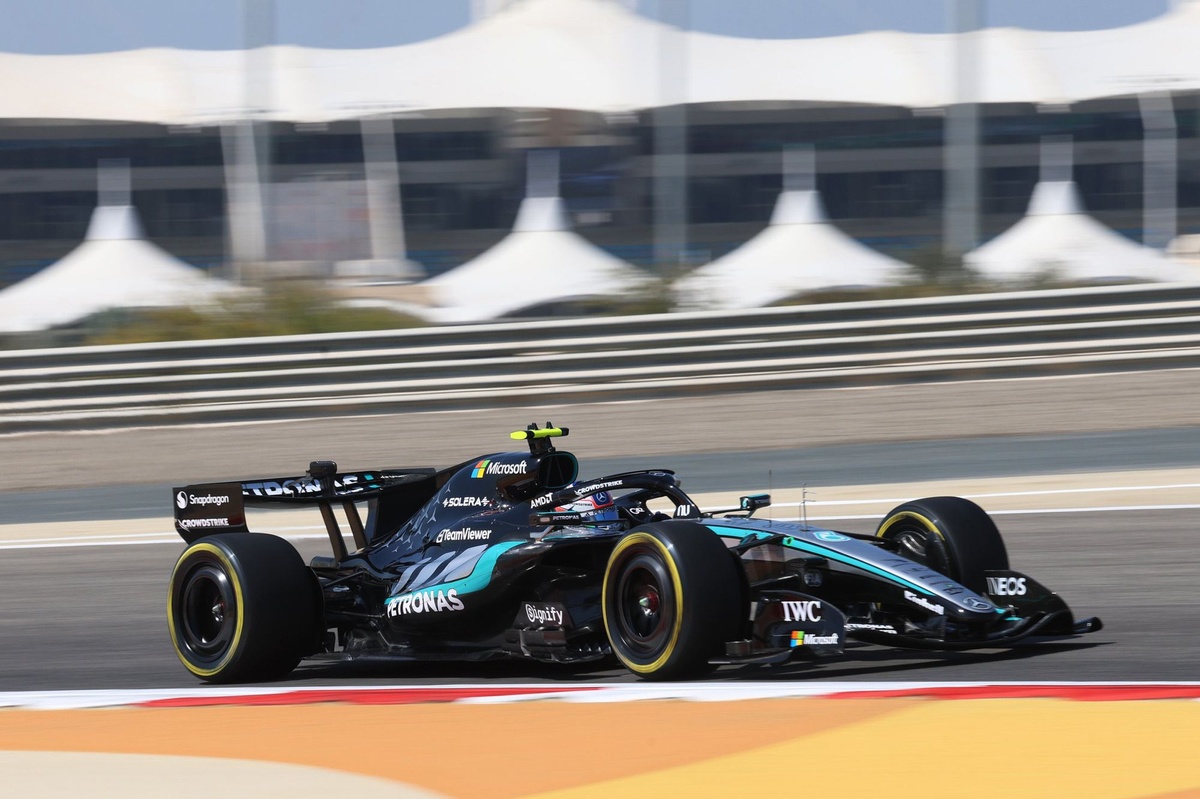
Formula 1 pre-season testing for the 2026 season kicks off today in Barcelona with five days of running ahead.  Of these five days, teams will be limited to just three days allowed on track, which they are able to individually choose depending on what best suits their testing plans, with Ferrari confirming it will not be running for the first time until Tuesday, 27th, February and then again on Thursday, 29th, with the third day still to be decided. But unlike in previous years, when F1 pre-season testing has been televised, running in Barcelona will not be broadcast live.  Live timing will not be available, with it being up to each team to decide what information, such as the number of laps completed and any lap-times, they release to the public.  In the UK, Sky Sports F1 will be producing a nightly round-up of the action, but there will otherwise be little information from the private shakedown at the former Spanish Grand Prix venue, but why is this? Why F1's Barcelona 2026 pre-season test is not on TV During the last massive change to F1 power units in 2014, testing was the usual free-for-all, and the sight of multiple teams stranded in the garage suffering from teething troubles caused embarrassment.  So, in order to avoid as much negative press as possible whilst teams and power unit suppliers ensure the basic fundamentals are actually working as intended, the Barcelona test has been declared as a 'behind-closed-doors' outing.  The same was declared for the first 2022 test when the ground effect machines were introduced, and the nasty surprise of porpoising was discovered. Essentially, F1's Barcelona 2026 pre-season test is not being televised to allow teams to complete their first serious running away from the media spotlight before heading to Bahrain's two three-day outings in February.  At least nine of the 11 teams will be running in Barcelona at some point through the week.  RacingNews365 reported last week that Williams will not be taking part due to delays in passing the crash tests, whilst Aston Martin is set to not be on track until Wednesday at the earliest.

The hidden danger lurking in controversial alleged F1 engine trick
racingnews365.com·

The hidden danger lurking in controversial alleged F1 engine trick

The thorny issue of compression ratio, and its measurement by the FIA, has not yet been definitively resolved, although single-seater technical director Nikolas Tombazis is optimistic it will be before the season-opener. It has been alleged that Mercedes High Performance Powertrains (HPP) and Red Bull Powertrains (RBPT) have developed a system to potentially run a higher compression ratio than allowed by the rules, so it is worth examining why rivals Audi, Ferrari, and Honda are unhappy.  Essentially, it is claimed that HPP and RBPT will be able to generate a compression ratio of 18:1 through the use of heat-expanding metals when the car is on track, although this has yet to be demonstrated in the specific conditions of using an F1 power unit.  A higher compression ratio results in more engine power due to an increase in the thermal efficiency of the engine - more energy being unleashed from the same amount of fuel.  In simple terms, it must by compressing the air-fuel mixture before combustion, a higher compression ratio will create a more powerful explosion, allowing the pistons to move faster, increasing power. A higher compression ratio means that the air-fuel mixture is compressed into a smaller space, creating higher temperatures and pressures. A cleaner combustion is thus reached, creating higher thermal efficiency - the conversion of heat into mechanical energy.  With the higher ratios, during the expansion (combustion) phase, the gases created in combustion can expand over a greater distance, leading to more mechanical energy, with a more efficient combustion cycle, thus increasing pressure and improving torque, especially at low and medium speeds. A good rule of thumb is that each additional percentage point of compression ratio can generate an estimated 3-4% increase in power. However, compression ratio cannot be increased indefinitely.  In gasoline engines, too high a ratio carries the risk of uncontrolled detonations before the optimum combustion point - known as knock. This can cause major damage to the engine. For this reason, high-octane fuels are used to manage temperatures, wit the FIA's 16:1 limit for compression ratio safer than the 18:1, with the sophistication of the fuel mixtures also important in how they can delay the detonation point. It makes the additional challenge facing the F1 fuel suppliers with the fully sustainable mix for 2026 all the more important, especially with the now 50-50 split in power generation between the internal combustion engine and battery power.

How F1 pre-season testing works
racingnews365.com·

How F1 pre-season testing works

2026 F1 pre-season testing is more important than ever before, given the scale of changes made to cars over the winter. For the new campaign, the single-biggest overhaul in regulations has taken place, with changes to both the engines and chassis being introduced.  The new power units now feature beefed-up electrical systems, with 350kw of power up from the 120kw in 2025, with power now set to come via a 50-50 split between the internal combustion engine and batteries.  On the chassis, active aerodynamics have been introduced.  Three pre-season tests are planned, with one in Barcelona scheduled between January 26th - 30th, before heading to Bahrain for two three-day tests in February.  The Barcelona test is a private, behind-closed-doors shakedown, with teams permitted to run for three of the five days, for nine days total before the season-opening Australian GP on March 8th.  View the schedule for the first week of testing below! The article continues below. F1 Barcelona pre-season testing schedule How Barcelona testing works Essentially a private shakedown, teams will be able to run for three of the five days in Barcelona, and it is up to them to decide which three. For example, Ferrari will be running on Tuesday for the first time and Thursday as well, meaning it still has to decide between Wednesday and Friday.  During the hours when the track is open, teams can complete any number of tests and do whatever they want, although the first days in Barcelona are likely to focus on systems and engine checks before any serious aerodynamic work is completed later in the week and in Bahrain.  Most teams who have launched their cars so far have completed shakedowns, but for the drives, Barcelona will be the first time to get up to speed with the new demands of the power units, a change Lewis Hamilton has branded the biggest in his career. What are the aero-rakes? Pre-season testing is the time to spy cars looking a bit unusual with the aero-rakes bolted to the side as cars pound around. Essentially, they are aero-sensors, and are tasked with collecting data about airflow to see if the team's wind-tunnel and CFD simulations are translating into the real world.  What is the function of flow viz paint? In addition, we often see teams using some kind of paint on the car. That, too, is intended to learn more about the airflow, and ensure the air passing over the car, is in fact, doing what is expected of it.  What is sandbagging? Teams will always try to keep their true pace under wraps and a secret for as long as possible.  Disguising your true pace is known as 'sandbagging.' Essentially, it is running the car full of fuel and in lower engine power settings not to give an indication of the true pace, although through GPS tracking, rivals can usually work out who is doing what.  Towards the end of testing, if a team has had a poor test, it will often complete a 'glory run', which is taking all of the fuel out and turning the engine up to steal the headlines with 'Team X fastest in F1 pre-season testing.'

Lewis Hamilton and Charles Leclerc handed major Ferrari warning: 'It's a disaster'
racingnews365.com·

Lewis Hamilton and Charles Leclerc handed major Ferrari warning: 'It's a disaster'

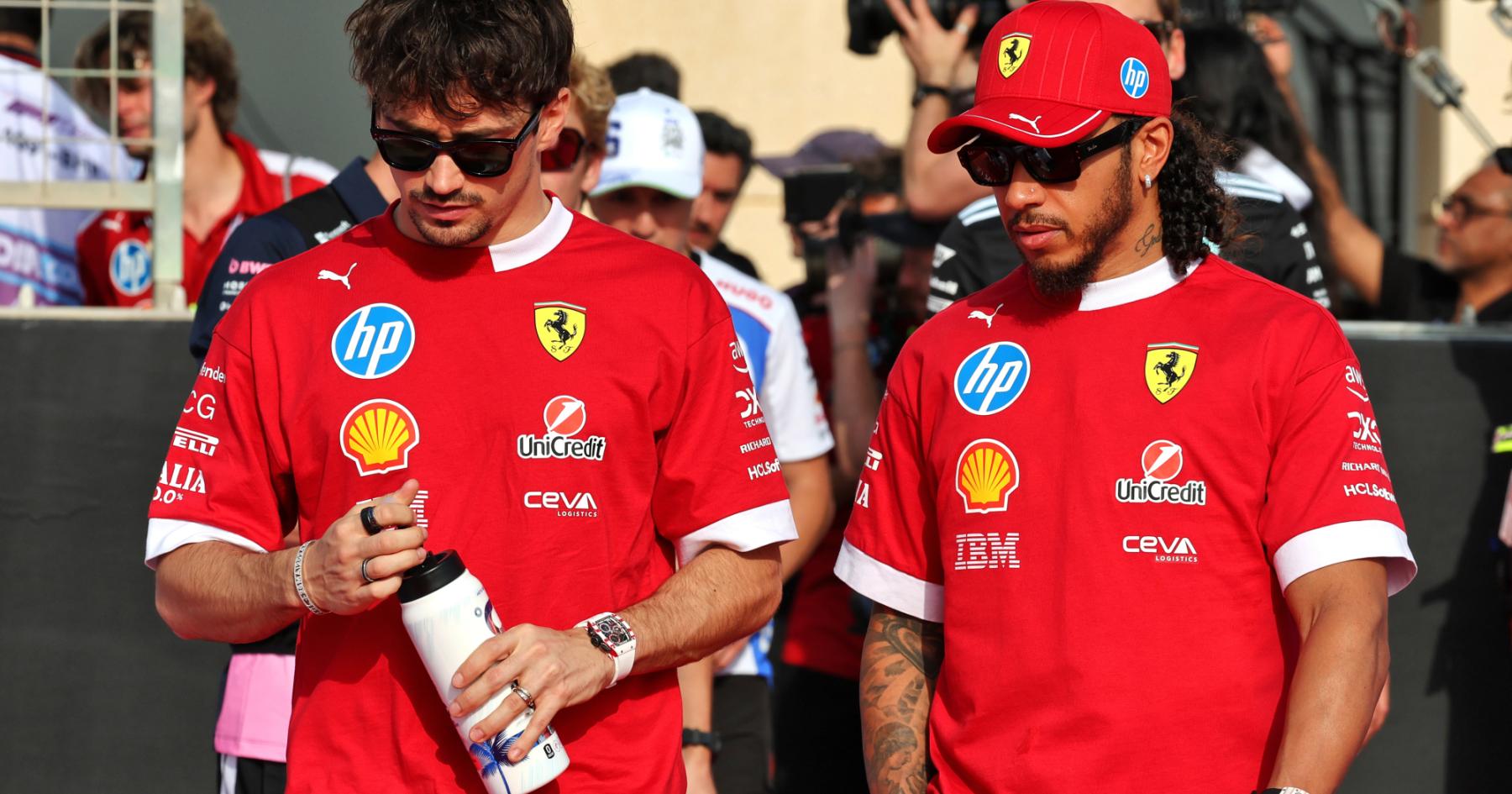
Former F1 driver Ralf Schumacher has warned Lewis Hamilton and Charles Leclerc that Ferrari’s 2026 season already looks set to be a "disaster" due to its development approach. The Scuderia are taking an extremely aggressive approach to F1’s new power-unit regulations and are essentially working on two different cars. Ferrari team principal Fred Vasseur confirmed during the outfit’s Christmas gathering in Maranello that it had adopted a two-phase development approach for the first race under the new regulations. An A-spec car will be used during next week’s behind-closed-doors test in Barcelona, before a B-spec car is introduced at the official pre-season tests in Bahrain next month. This will result in major aerodynamic and performance-related improvements in Bahrain, where a clear evolution of the SF-26 will be seen. Ferrari is not alone in this, with the vast majority of teams having already confirmed that whatever its car looks like in Barcelona will be very different by the Bahrain tests and the season opener. Schumacher has heard similar regarding Ferrari’s strategy for the upcoming season and believes it does not paint a positive picture for the Scuderia. "As for Ferrari, disaster already seems to be looming again, at least reading between the lines," Schumacher told Sky Deutschland’s Backstage Boxengasse podcast. "That’s what stands out the most. "They appear to be developing two different cars. I can almost imagine that it’s because Charles Leclerc and Lewis Hamilton have completely different opinions on the car. "If that’s the case, it’s a disaster from the outset. "I’ve always said you can’t develop two cars and Fred Vasseur has hinted at it himself as well, so it all seems far from ideal."

Ferrari strike F1-first in new global partnership
racingnews365.com·

Ferrari strike F1-first in new global partnership

Ferrari have secured a groundbreaking collaboration with human performance company WHOOP that promises to revolutionise how Formula 1 teams monitor and optimise its personnel's physical wellbeing. The multi-year agreement, announced today, will see WHOOP become the Official Health and Fitness Wearable Partner and Team Partner from the 2026 season onwards.  The partnership extends far beyond traditional sponsorship arrangements, with the American company's technology being integrated throughout Ferrari's operations to unlock crucial insights into health, recovery, and fitness data. WHOOP's distinctive branding will feature prominently on Ferrari's cars and driver overalls when the new regulations come into effect, whilst team members across the organisation will utilise the company's continuous monitoring devices to track their physiological responses across the season The collaboration represents a first-of-its-kind initiative that will see Ferrari's medical team work directly alongside WHOOP's Performance Science division, headed by Dr. Kristen Holmes, to develop bespoke human optimisation programmes tailored specifically for the unique pressures of F1. "WHOOP and Scuderia Ferrari HP share the same obsession: performance at the edge," explained Will Ahmed, Founder and CEO of WHOOP.  "Scuderia Ferrari HP has spent generations turning data and precision into speed. We've done the same for the human system. Bringing those worlds together is a natural fit, and we're proud to bring this expertise into Formula 1." An F1 first The partnership unites two organisations renowned for their data-driven approaches to achieving excellence at the highest levels of competition.  Ferrari's decades of F1 experience and record-setting legacy have long emphasised the integration of human capability with engineering excellence, making them natural partners for WHOOP's 24/7 continuous health monitoring technology. Beyond the immediate performance benefits, the collaboration aims to produce scientific research that could influence how motorsport approaches human performance management.  "The partnership includes plans to develop a comprehensive research paper documenting the insights gathered through this innovative approach to team wellness and optimisation. "This partnership goes far beyond a logo on the car," stressed Dr. Kristen Holmes, Global Head of Human Performance, Principal Science at WHOOP.  "By embedding WHOOP across the team, we're able to deliver continuous, real-world insights into recovery, sleep, strain, and resilience; giving Scuderia Ferrari HP's drivers, and entire organisation the essential data to adapt faster, manage fatigue, and maintain their wellbeing under the extreme conditions of this sport and pressure."