Formula ReportFormula Report

Search

Franco Colapinto sponsor disappears as Lewis Hamilton hands Ferrari instruction - RacingNews365 Review
racingnews365.com·

Franco Colapinto sponsor disappears as Lewis Hamilton hands Ferrari instruction - RacingNews365 Review

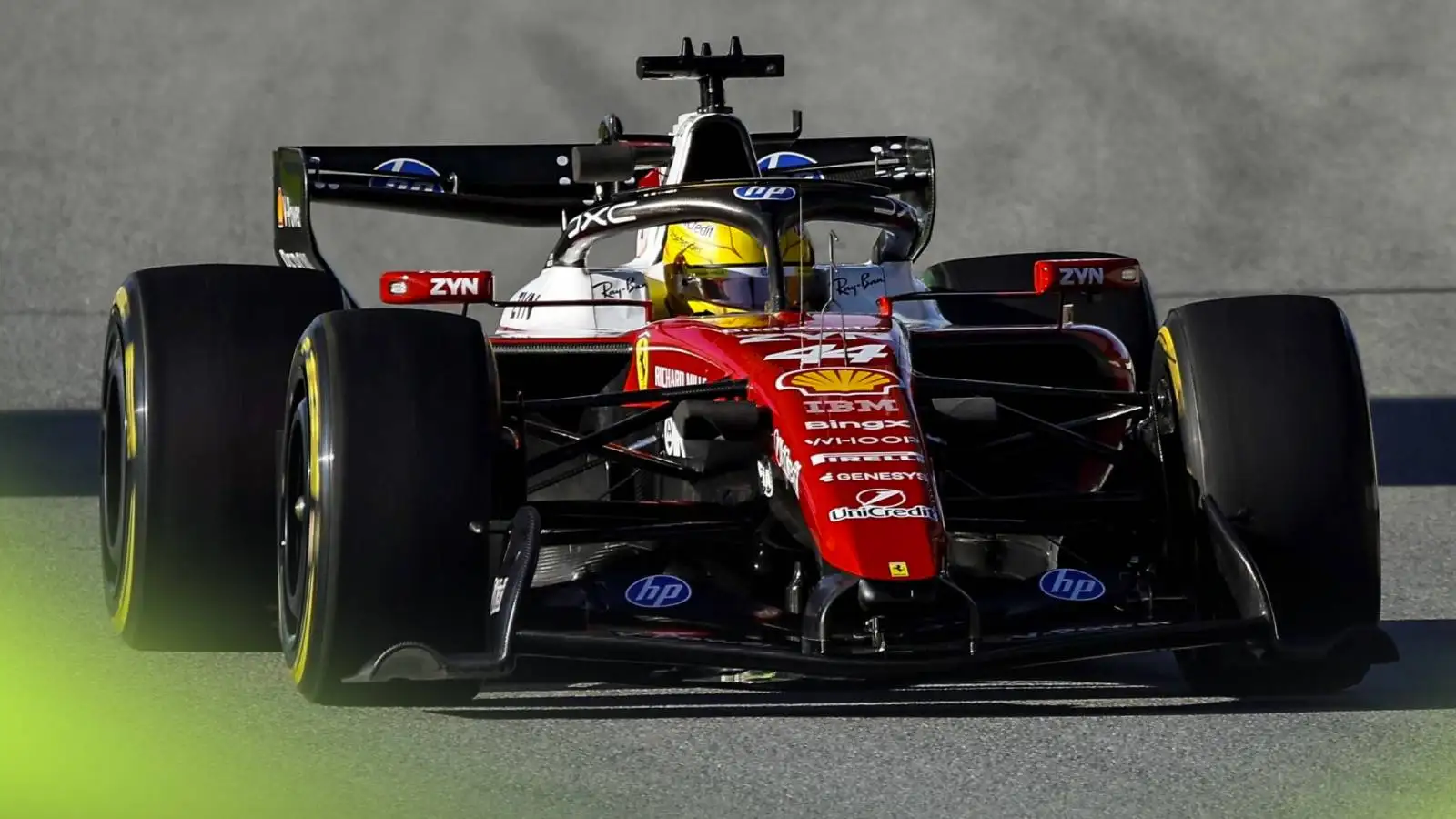
Franco Colapinto's main sponsor disappears at Alpine Franco Colapinto's main sponsor has disappeared from Alpine's sponsorship portfolio. What is the reason, and what can we expect now? READ MORE: Franco Colapinto's main sponsor disappears at Alpine Lewis Hamilton issues Ferrari firm instruction after 'no illusion' F1 claim Lewis Hamilton set the fastest time in the Barcelona test, but feels Ferrari must be "concise" as it moves to Bahrain. READ MORE: Lewis Hamilton issues Ferrari firm instruction after 'no illusion' F1 claim Fernando Alonso stunned by immediate impact of 'teacher' Adrian Newey Fernando Alonso is enjoying seeing the pupils in the class of 2026 under teacher Adrian Newey. READ MORE: Fernando Alonso stunned by immediate impact of 'teacher' Adrian Newey Lando Norris hands F1 rivals 'too easy' warning after Barcelona shakedown World champion Lando Norris believes it is too premature to draw any conclusions after Barcelona. READ MORE: Lando Norris hands F1 rivals 'too easy' warning after Barcelona shakedown George Russell shares surprising 'good news' after eye-catching Mercedes test George Russell has identified a major positive for F1 drivers in 2026 after the rule changes. READ MORE: George Russell shares surprising 'good news' after eye-catching Mercedes test Cadillac drop Super Bowl livery teaser involving US president Cadillac's livery for 2026 is to be unveiled during the Super Bowl half-time show later this week. READ MORE: Cadillac drop Super Bowl livery teaser involving US president

'Extreme' Red Bull clears first F1 hurdle as Mercedes and Ferrari assert control
racingnews365.com·

'Extreme' Red Bull clears first F1 hurdle as Mercedes and Ferrari assert control

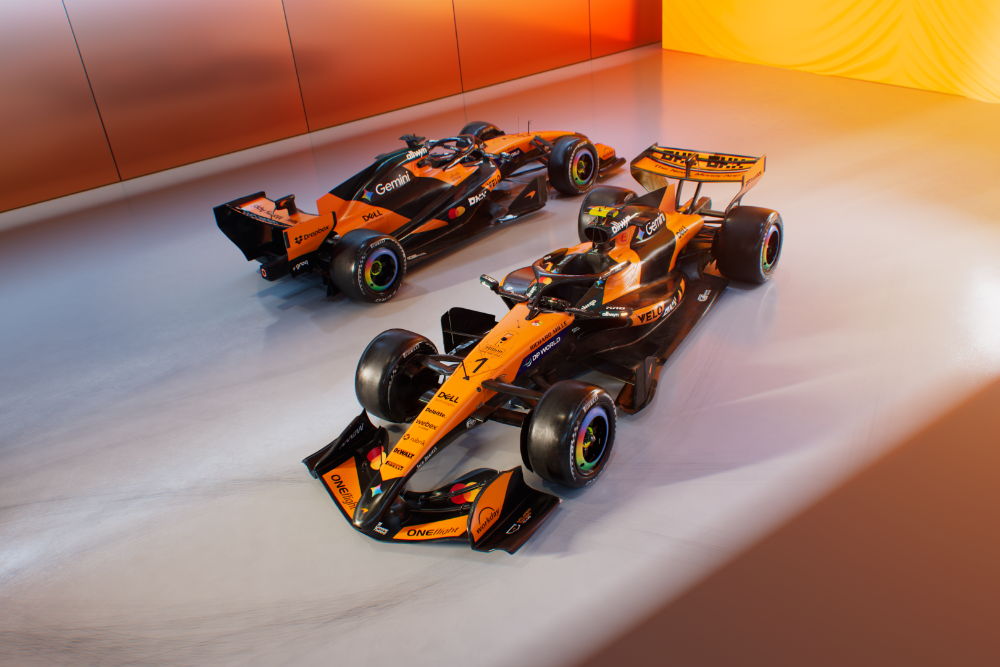
Analysing the performance of the Barcelona shakedown is almost impossible owing to the usual variables of fuel loads and engine modes used to achieve their best times.  If we look at the fastest four times recorded in Spain during the week, it is clear that the performance was very close, with 0.305s between Lewis Hamilton and Ferrari team-mate Charles Leclerc, with George Russell and Lando Norris sandwiched in between.  Fastest four times in Barcelona shakedown Whilst it is worth noting the presence of two Ferraris in the top four, it is not overly relevant in assessing the actual performance of the car, with other factors outside the isolated lap times influencing performance, such as temperatures, grip from the track, and the tyre compounds.  To get a slightly more accurate picture of the early pecking order, the laps completed by each team must be factored in, although the caveat of it not being indicative of pure performance should be noted. Number of laps completed by each team Testing conclusions The 502 and 435 laps completed by Mercedes and Ferrari, respectively, represent a solid benchmark, showing strong reliability with a test lacking in any major technical woes. It was certainly comforting for both teams to have completed their running so consistently and to show flashes of performance. Mercedes came away in an upbeat mood, with George Russell and Kimi Antonelli buoyed by their progress, whilst Ferrari was also content, especially when the comments of Lewis Hamilton and Charles Leclerc are compared, with unanimous praise for the SF-26, whilst 12 months ago in Bahrain, opinions between the drivers diverged massively.  Turning to the defending world champions McLaren, it seems clear that the MCL40 has very high potential, with Norris's time coming without any major effort, but otherwise, the running completed seemed to be in disguise.  Prior to the test, McLaren had sent its car to AVL in Austria for extensive dyno running, which could have provided leads that the track tests only had to confirm, even through the use of non-extreme power unit modes and fuel levels, to conceal their significance from rivals. Ergo, the MCL40 is a car which, from what emerged in Barcelona, was well born and, on paper, capable of fighting with Mercedes, with which it shares an engine. The initial feedback of the Red Bull is that it is a car which could be a valuable tool in the hands of Max Verstappen, with a design which has interesting points of conceptual extremism.  What was most striking about the RB22 was the reliability of the Red Bull Powertrains-Ford engine, which, although not pushed to the maximum, appeared to be less problematic than Audi's effort. Audi faces a steep learning curve to optimise its power unit performance alongside the usual vehicle and aerodynamic aspects, which, to date, does not seem to have been the main target of the team, instead focusing on the challenge of mastering the tricky new engine formula. Firmly in the midfield are Racing Bulls, Haas, and Alpine, three teams which completed a healthy number of laps, with no power unit reliability concerns from their respective RBPT, Ferrari, and Mercedes suppliers. Of the three, it is Haas who emerges just in front, ahead of Racing Bulls and Alpine, despite Pierre Gasly's respectable eighth-fastest time overall.  At the back are Audi and Cadillac, which focused mainly on establishing an understanding of the power unit modes and learning how to operate trackside. In short, Cadillac's week was largely an overall validation of the project. Although Aston Martin did also make it out on track late on Thursday, it is impossible to rank the Adrian Newey-designed machine, owing to the limited running in which the AMR26 only completed a single full day on Friday.

Red Bull extreme design reveals radical 2026 F1 approach
racingnews365.com·

Red Bull extreme design reveals radical 2026 F1 approach

Red Bull's absence from Wednesday's pre-season test running provided a rare opportunity to scrutinise the RB22's aerodynamic philosophy, highlighting that the Milton Keynes-based squad has again pushed boundaries with its unconventional approach. Two standout features demonstrate just how aggressively Red Bull has interpreted the 2026 regulations. The crash structures flanking the cockpit sit prominently atop the sidepods, with their extremities extending well beyond the bodywork profile. This radical positioning allows Red Bull to maintain remarkably compact sidepods, maximising airflow towards the car's rear sections where crucial downforce is generated. It's classic Red Bull engineering: finding performance gains where others see regulatory constraints. The second notable element mirrors Mercedes' approach: a pronounced slot carved into the diffuser's lateral section. This wide aperture in the vertical sidewall directs airflow through a critical aerodynamic zone, suggesting both teams have identified similar performance opportunities. That Red Bull and Mercedes have converged on comparable solutions isn't surprising. Advanced computational fluid dynamics and wind tunnel correlation now allow teams to optimise every millimetre of bodywork, often leading to similar conclusions despite different starting philosophies. Red Bull's adoption of this diffuser concept also dispels any notion of regulatory grey areas. The solution makes aerodynamic sense, particularly with the return of rake adjustments that disappeared from earlier ground-effect machines. McLaren has similarly embraced pronounced rake angles rather than the minimal approach initially anticipated for the 2026 cars. The MCL40  machine suggests teams are converging on higher rake philosophies as the optimal aerodynamic configuration. The technical direction validates Red Bull's reputation for never choosing conservative solutions when radical alternatives offer performance advantages.

What's Honda hiding? Details of new F1 power unit expertly concealed
racingnews365.com·

What's Honda hiding? Details of new F1 power unit expertly concealed

In photos of the new Honda power unit, shared by RacingNews365 earlier today , the Japanese manufacturing giant displayed its all-new system. Of course, dark shadows made it a little tricky to really zoom in on the design. Even so, it was unusual for F1 to get acquainted with a power unit in this way, especially given the changes for this season. The PU has undergone a major overhaul, noticeably the removal of the MGU-H, leading to a beefed-up MGU-K that will provide 350kW of power as opposed to the previous 120kW, designed to enhance overtaking and improve straight-line speed. In other photos, however, it was clear that Honda, quite naturally under the circumstances, had no intention of revealing all of its secrets. Certain components on the underside of the PU were skillfully blurred out.  RacingNews365 technical expert Paolo Filisetti explained that it was done, not so much to hide certain components from view, but rather to shield the configuration of those components in relation to one another. Nevertheless, the spying eyes of Honda's competitors may still be able to conclude how the PU fits into the Aston Martin chassis, and from there, reach potential conclusions on the aero design as a result. Offering a general assessment on Honda's new PU, Toshihiro Mibe, Honda Motor Corporation president and representative executive officer, said: "In 2026, F1 will undergo a major change in regulations for both the chassis and power unit. "Honda sees F1 as a symbol of challenge and innovation, and HRC, the global racing arm of Honda, has developed the RA626H, the new power unit for the 2026 season, to meet those challenges. "Striving to become number one in the world, Honda will continue to take on challenges, together with the Aston Martin Aramco Formula One Team."