

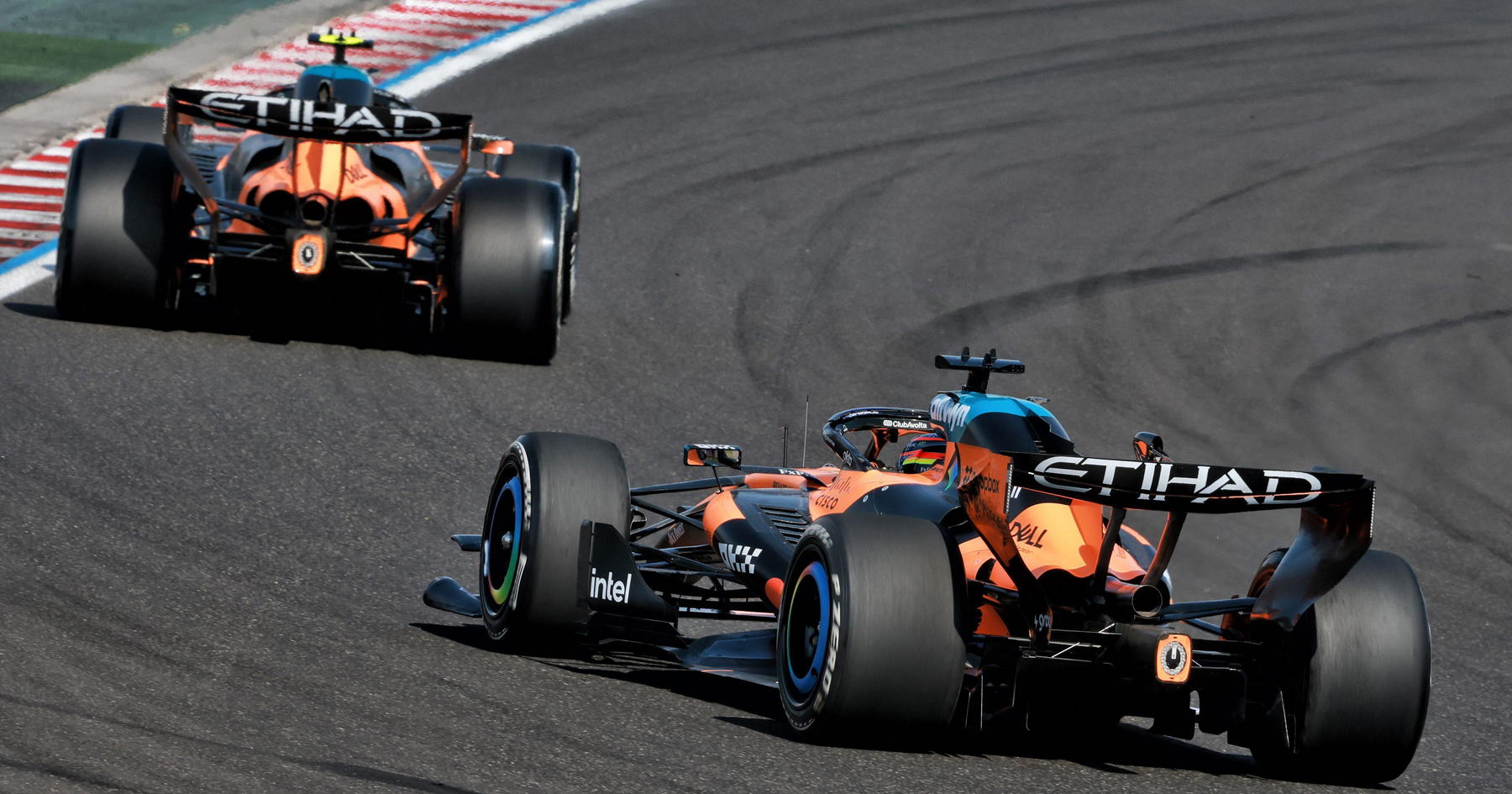
The 2026 Formula 1 season is shaping up to be a pivotal year for many teams as they navigate the complexities of new regulations and the fierce competition on the grid. With the Hungarian Grand Prix marking a significant turning point, teams like McLaren and Williams are making bold moves to enhance their performance. As the season progresses, the pressure is on to adapt and innovate, ensuring that they remain competitive against their rivals.
Recent developments have highlighted the contrasting fortunes of various teams. While McLaren has made strides with its upgrades, Williams is grappling with deeper issues that have plagued its performance. The upcoming races will be crucial for these teams as they seek to capitalize on their respective strategies and address the challenges ahead.
McLaren's Strategic Upgrades
McLaren's recent upgrades at the Hungarian GP have been described as a 'correction of the course' for the MCL40 machine. Team principal Andrea Stella emphasized the importance of studying rivals to inform their development strategy. This approach has already yielded positive results, with Lando Norris securing a victory at the Hungarian Grand Prix, showcasing the effectiveness of the upgrades.
Despite the success, Norris expressed disappointment with the overall performance in 2026, indicating that there is still room for improvement. The team is focused on building momentum and confidence as they continue to refine their car. Stella's comments suggest that McLaren is not resting on its laurels, but rather is committed to pushing the boundaries further as the season unfolds.
Williams' Ongoing Struggles
In stark contrast to McLaren's progress, Williams is facing significant challenges as it attempts to rectify what driver Alex Albon has termed 'genetic DNA' problems affecting its performance. Albon noted that the team is undertaking the 'biggest effort I've seen' to address these issues, highlighting the urgency of their situation.
As Williams works to improve its competitiveness, the team is under pressure to deliver results. The upcoming races will be critical for them to demonstrate that their efforts are translating into on-track performance. The contrast between McLaren's upward trajectory and Williams' struggles underscores the competitive nature of F1, where teams must continuously innovate to stay relevant.
What's Next for F1 Teams?
Looking ahead, the 2026 season promises to be a thrilling contest as teams like McLaren and Williams strive to find their footing amidst evolving regulations. With McLaren's recent success, the team is poised to build on its momentum, while Williams must quickly address its performance issues to avoid falling further behind.
As the season progresses, the focus will also shift to other teams, such as Ferrari, where Charles Leclerc has urged for an aggressive approach to upgrades. The competitive landscape is ever-changing, and teams must remain vigilant and adaptable to seize opportunities as they arise.
Key Takeaways
- McLaren's upgrades at the Hungarian GP marked a significant turning point.
- Lando Norris secured victory but expressed disappointment in overall performance.
- Williams is facing deep-rooted issues affecting its competitiveness.
- Alex Albon highlights the team's significant efforts to improve.
- Ferrari's Charles Leclerc calls for aggressive upgrades in the new era.
Sources
- RacingNews365: McLaren reveal 'change of course' decision after studying F1 rivals
- RacingNews365: Alex Albon pinpoints Williams' Achilles' heel in ongoing F1 odyssey
- PlanetF1: McLaren makes telling Oscar Piastri admission after difficult first half
- RacingNews365: Exclusive: Honda highlight Fernando Alonso 'trust' as major F1 target outlined
- RacingNews365: Charles Leclerc sets 'aggressive' Ferrari instruction in new upgrade arms race
- motorsportweek.com: Lando Norris admits ‘we’ve been disappointed’ with F1 2026 performance
- Motorsport.com: Mercedes impressed by "sizeable" McLaren upgrade after Hungarian GP defeat
- Crash.net: First details of Honda’s new F1 engine emerge after track debut
- Motorsport.com: Lando Norris "much more confident" than during 2025 title campaign, says Andrea Stella
- Motorsport.com: Aston Martin completes filming day with upgraded Honda engine
- RacingNews365: Helmut Marko delivers striking Max Verstappen prediction
- RacingNews365: Isack Hadjar explains why shared Max Verstappen struggles at Red Bull are 'reassuring'
- RacingNews365: Exclusive: Max Verstappen quashes persistent Red Bull F1 narrative
- RacingNews365: Toto Wolff makes Mercedes driver warning as Fernando Alonso sends clear Honda message - RacingNews365 Review
- RacingNews365: Toto Wolff urges F1 restraint after McLaren breakthrough victory
- RacingNews365: F1 details early 2027 calendar plans amid Middle East uncertainty
- RacingNews365: Oscar Piastri unlocks McLaren discovery after 'fundamental' F1 change
- motorsportweek.com: Charles Leclerc pleads for Ferrari to take ‘aggressive’ F1 upgrade strategy
- RacingNews365: How Brexit and the NFL stopped potential second Las Vegas F1 race
- RacingNews365: Lando Norris makes point that should worry F1 rivals